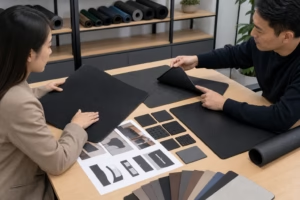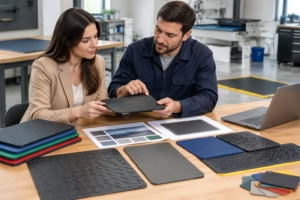
For custom mat printing, prepare more than a logo file. A reviewable artwork package should connect the design to the intended mat type, finished dimensions, printable surface, backing, edge treatment and use environment. It should also identify color references, orientation, important text and the proof or sample required for approval. Ninghow’s Wide-Format Printing and Heat Transfer capability should be discussed alongside these product details, because artwork suitability depends on the selected construction and printing process.
The practical rule is simple: do not treat an artwork file as production-ready until the manufacturer can relate it to an approved product specification. Accepted formats, font handling, linked assets, bleed, safe areas, color workflow and dimensional tolerances require current, project-specific confirmation from Ninghow. The preparation below helps buyers assemble the right questions without turning general prepress practice into a universal Ninghow requirement.
What a Custom Mat Artwork Package Must Define Before Review
A complete artwork package gives the manufacturer enough information to assess design intent, physical geometry and production risks together. Start with the application: a desk mat, counter mat, work mat or another product may have different viewing distances, cleaning conditions, wear exposure and surface requirements. State where the mat will be placed, how it will be used and which visual elements are most important.
Next, identify the proposed mat construction. Include the mat type, finished length and width with units, orientation, printable surface, backing, edge treatment and any preferred thickness or cushioning target. If the construction is still open, mark those items as decisions rather than assumptions. Surface texture, backing movement and edge finishing can affect the practical print area and the appearance of fine graphics.
For the design itself, provide the editable source artwork when available, together with placed logos, text, patterns, photographs and brand color references. Production notes should explain repeat direction, logo placement, required margins, unprinted areas and any compliance or identification markings. A flattened proof can show the intended appearance, but it may not preserve the separate assets needed to inspect or prepare the file.
One-Page Artwork Brief
| Brief area | Buyer input | Why it matters |
|---|---|---|
| Product | Application, mat type, placement surface and intended viewing distance | Connects design complexity and legibility to actual use |
| Construction | Printable surface, backing, thickness target, edge treatment and orientation | Defines the physical reference for artwork review |
| Geometry | Finished dimensions, units, cut shape, print area and border treatment | Prevents incorrect scaling, cropping or placement |
| Artwork | Editable files, logos, fonts, linked images, patterns and photographs | Preserves design intent and supports preflight |
| Color | Priority brand colors, reference files and acceptable visual variation | Sets a realistic basis for proof discussion |
| Approval | Proof or sample preference, approvers, revision status and next action | Creates a controlled release decision |
Separate required information from preferences. For example, the finished size and intended orientation may be essential, while a preferred file format may remain subject to Ninghow’s current intake method. Ask Ninghow to confirm accepted formats, font handling, linked-asset packaging and delivery method before sending the final handoff.
Applied example: resolving an artwork handoff gap
A brand team wants a full-coverage counter mat with a logo, small text and a repeat pattern. The finished dimensions and viewing orientation are known, and the team has an editable file plus brand color references. However, the surface, backing, printable area and edge treatment are not confirmed. Because the dieline, color-review method and project-specific safe-area guidance are missing, the file should not be released as production-ready. The next action is to send a structured brief and request the selected construction, print area, finishing details and annotated proof requirements.
How to Define Finished Size, Print Area, Bleed and Safe Areas
Artwork geometry should be agreed before a design is scaled, cropped or released for sampling. Finished size is the final product dimension. The cut line or trim line shows where the mat is intended to be cut. The printable area identifies where the selected process can place artwork. Bleed is artwork extending beyond the intended cut boundary, while the safe area keeps important content away from that boundary.
These references are not interchangeable. A design canvas can be larger than the finished mat because it includes bleed. The printable area may be smaller than the finished size if the construction or edge treatment leaves an unprinted margin. Ninghow should provide or approve the applicable drawing, proof or dieline, including the measurement basis and project-specific limits for the selected mat construction.
Review the layout according to its design case:
- Full-bleed artwork: Background color, photographs or patterns extend toward the perimeter. Confirm how the cut line and edge treatment affect the visible result.
- Bordered artwork: A border requires consistent spacing from the finished edge. Even small trimming variation can make a narrow border appear uneven.
- Inset artwork: Logos and text sit inside an unprinted or quieter margin. This can reduce edge risk but must still be checked against the usable print area.
Always state dimensions with units and distinguish the artwork canvas from the finished product. Include orientation, corner or cut shape, logo reference points and any repeat-pattern direction. Small text, thin lines and perimeter graphics deserve particular attention because their visibility can change with trimming, edge finishing and viewing distance.
Geometry decision checklist
- Is the finished length and width clearly separated from the artwork canvas size?
- Are the cut line, printable area, bleed and safe area shown on an approved reference?
- Is the orientation fixed, including the direction of a repeat pattern or logo?
- Does the design use a full bleed, border or inset layout?
- Could the edge treatment change the visible boundary or reduce the usable print area?
- Has Ninghow confirmed the applicable tolerances and measurement locations?
Which Source Files, Color References and Image Details Need Review
Choose source files according to what must be inspected or changed. Editable vector artwork is useful for logos, clean shapes and text-based graphics because it can preserve scalable paths. Editable layered artwork can retain separate design elements and adjustment information. High-quality raster artwork may suit photographs or textured imagery, while a flattened proof is primarily a visual reference. The best submission may include more than one of these.
During preflight, check whether fonts are supplied or converted as appropriate, whether linked images are included, and whether transparency, overprinting, embedded profiles and image scaling have been handled intentionally. Resolution should be judged at the intended output size and viewing distance, not by a generic number detached from the project. Ask Ninghow which source formats and asset-packaging method are currently preferred for the selected printing process.
CMYK artwork for mat printing should be treated as a workflow discussion, not an automatic guarantee of final color or a universal acceptance rule. Screen colors, digital values, proof materials and the chosen mat surface can appear different. Provide priority brand colors and any approved physical or digital references, then use the manufacturer-reviewed proof to identify substitutions, missing assets or appearance risks before sampling.
Preflight checklist
- Editable source artwork and a clearly identified visual proof are included.
- Fonts, linked images and placed logos are available or their treatment is documented.
- Finished dimensions, orientation, print area and placement references are stated.
- Transparency, overprinting, image scaling and color-profile choices have been reviewed.
- Priority colors and reference materials are identified, with no assumption that screen color equals finished-mat color.
- The file status, approval owner and next action are recorded in plain language.
Technical file suitability and final print appearance are separate decisions. A file may be editable and complete while still requiring changes after review against the physical surface, proof or sample. Resolve those differences before production release.
How Material, Layers and Surface Finish Change the Artwork Decision
Artwork should be judged on the finished mat, not only on a monitor. Before approving a design, identify the printable surface, backing, cushioning, texture, total thickness, cleaning conditions and areas exposed to frequent handling or wear. These details affect how small text, fine lines, photographs, gradients and repeat patterns should be reviewed.
In a layered mat, the surface is the visible or printable face. The backing supports contact with the placement surface, while a carrier, adhesive or cushion layer may influence flexibility, compression and overall thickness. Do not add component-layer values mechanically when comparing different constructions. The manufacturer should confirm the complete finished specification and the relationship between layers.
Application also changes the artwork decision. A counter mat may need highly legible information at a defined viewing distance. A desk or gaming mat may require careful logo placement around active areas. A tool mat may expose graphics to handling and cleaning, while a yoga or Pilates mat may require review of texture, cushioning and repeated contact. Confirm the actual construction rather than inferring printing compatibility from a broad product category.
Material-to-Artwork Decision Matrix
| Buyer consideration | Artwork question | Evidence or next action |
|---|---|---|
| Surface texture | Will fine lines, small text or photographic detail remain clear on the selected face? | Review the proposed surface and inspect a manufacturer-reviewed proof or sample. |
| Viewing distance | Is the design read close-up, from a counter position or across a larger work area? | State the typical viewing position and prioritize essential information. |
| Wear exposure | Which areas receive repeated contact, cleaning or handling? | Request relevant sample or test evidence for the intended use. |
| Edge and backing | Could the edge treatment, movement or exposed construction affect borders and placement? | Review the finished outline, backing and edge method before release. |
How to Control Color, Cutting, Edges and Proof Approval
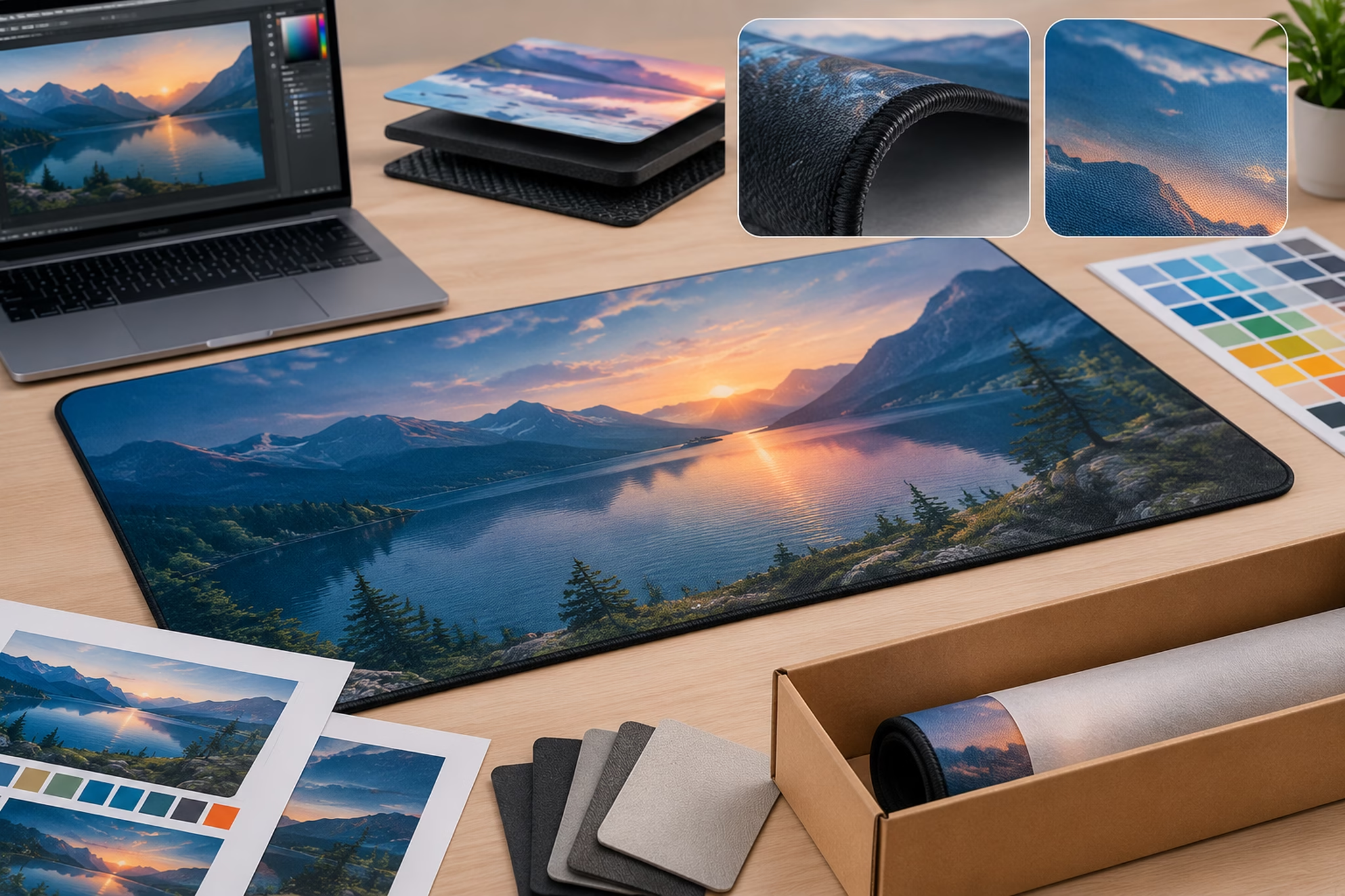
Color approval is a controlled comparison, not a promise that a screen image will match the finished mat exactly. Identify priority brand colors, the viewing conditions, the reference used for comparison and the amount of visual variation the buyer can accept. CMYK artwork for mat printing may support a particular workflow, but Ninghow should confirm the current color process for the selected material and printing method.
Geometry needs the same discipline. Review the cut shape, orientation, logo position, border continuity and edge finish together. A border close to the perimeter may be visually affected by cutting or edge treatment even when the source file is technically complete. Ninghow’s Laser Cutting, Die Cutting and Edge Finishing information can provide product context, but project-specific boundaries remain subject to the approved proof or construction drawing.
Sample and Approval Checklist
- Color: List priority colors, reference materials, viewing conditions and acceptable visual variation.
- Placement: Approve orientation, logo position, repeat direction, border treatment and important text location.
- Geometry: Check finished dimensions, cut shape, print area and edge appearance against the approved reference.
- Surface: Examine texture, gloss or visual uniformity on the actual proposed construction.
- Decision record: Record artwork, dimensions, color reference, physical sample and finishing decisions separately.
A digital proof shows intended placement and layout. A physical sample shows how the design appears on the selected construction. A production reference is the approved basis used for later comparison. Keep these terms separate, and do not treat a named test method or industry reference as an automatic project pass/fail limit. Ninghow’s Mat Quality Control and Color Consistency page is the next reference point for discussing inspection scope and appearance checks.
What to Send Ninghow for Sampling, Quality Control and Packaging Review
A complete handoff should let the manufacturer understand the product, artwork and commercial context together. Include the intended use, mat type, finished dimensions and units, orientation, quantity tiers, artwork files, color references, packaging needs, destination and target date. Also state the placement surface, performance priorities, cleaning conditions and any high-wear areas that could affect the sample review.
Ask Ninghow to confirm the selected material grade, complete construction, printable surface, print area, finishing method, sample approach, inspection basis and packaging configuration. Accepted formats, font handling, linked assets, color workflow, tolerances and measurement locations require current project confirmation. Do not assume that a format or prepress setting suitable for one printing process applies to every mat construction.
Reusable Specification Brief
- Product: application, mat type, placement surface and intended viewing distance.
- Construction: printable surface, backing, cushioning, total thickness, edge treatment and cleaning conditions.
- Geometry: finished dimensions, units, orientation, cut shape, print area and border or inset treatment.
- Artwork: editable source files, placed assets, fonts, photographs, repeat direction, transparency and color references.
- Approval: proof type, sample requirements, inspection features, responsible approvers and unresolved questions.
- Packaging and shipment: packaging needs, destination, shipment conditions and target date.
Applied example: resolving an artwork handoff gap
A brand team has finished dimensions, orientation, an editable file and brand color references for a full-coverage counter mat with small text and a repeat pattern. However, the surface, backing, print area, edge treatment, color-review method and safe-area guidance are unknown. The practical decision is to hold production release, send the specification brief to Ninghow, request an annotated proof for the selected construction and approve a sample or proof against the agreed reference.
After the artwork and product details are aligned, use Custom Mat Sample Development to structure the next review. Maintain a plain-language release log: each artwork file, specification, proof, physical sample and packaging brief may have its own identifier, revision and approval date. The log should cross-reference the exact versions reviewed and approved together.
Frequently Asked Questions
What should a buyer include in a custom mat artwork submission?
Provide the intended use, mat construction, finished dimensions, orientation, printable area, artwork files, color references, edge treatment and approval priorities. Add packaging, destination and target-date information when requesting sampling or quotation.
Should artwork for printed mats be supplied in CMYK?
CMYK may be relevant to the selected printing workflow, but it is not a universal guarantee of final color or automatic acceptance rule. Ask Ninghow to confirm the preferred color workflow and provide approved digital or physical references for priority colors.
How are bleed and safe areas determined for custom mats?
They depend on the finished size, printable surface, cutting method, edge treatment and project tolerances. Use the manufacturer-approved proof or construction drawing rather than applying one universal bleed or safe-area value.
What file format is best for a logo or repeat pattern?
Editable vector or layered source artwork generally preserves design intent for review, while high-quality raster artwork may suit photographs or textured graphics. Ninghow should confirm accepted formats and whether fonts, linked images or additional assets must be supplied.
How can buyers approve color before bulk production?
Identify priority colors, reference materials and viewing conditions, then compare the manufacturer-reviewed proof or physical sample with those references. Record the approved basis and any agreed visual variation before production release.
Does mat material or surface texture affect printed artwork?
Yes. Texture, cushioning, backing, cleaning conditions and wear exposure can affect how detail and color appear. Review the artwork on the selected finished construction, especially for small text, fine lines, photographs and perimeter graphics.