
Before requesting a sample or quotation, define the application, finished geometry, construction priorities, surface function and approval evidence. This Work-Surface Protection Mat Solutions guide provides a buyer-side checklist for preparing custom work-surface protection mat specifications. It is a project preparation guide, not a universal compliance standard: material suitability, tolerances, testing, printing and commercial details require project-specific confirmation from Ninghow Mats.
The most useful request combines what the buyer already knows with questions the manufacturer must resolve. A nominal material name or approximate size is not enough to establish finished-product suitability. The manufacturer needs to understand the protected surface, objects and users, operating conditions, measurable geometry, expected appearance and the evidence required before production approval.
What to Include in a Custom Work-Surface Mat Project Brief
Start with a one-page work-surface mat project brief that separates required conditions, preferred options and manufacturer-confirmation items. Describe the surface being protected, the tools or components placed on it, how users handle those objects, where the mat will sit and what the surrounding environment exposes it to. Include photographs, a placement drawing and any existing sample that shows the intended fit.
State the primary function in practical terms. The goal may be reducing scratches, improving grip, cushioning local loads, controlling impact, managing small amounts of liquid or protecting a defined working area. These are design objectives, not automatic performance claims. Explain how each objective will be judged, such as visual inspection, dimensional fit, handling evaluation or a defined test under agreed conditions.
Required, Preferred and Manufacturer-Confirmation Fields
- Required: protected surface, application, finished footprint, units, quantity tiers, destination, target market, packaging constraints and approval date.
- Preferred: material family, surface texture, color, logo treatment, edge style, packing format and handling preferences.
- Manufacturer confirmation: suitable grade, construction, thickness, tolerances, printing method, cutting process, test evidence, sampling details and commercial inputs.
This structure keeps a preference from being mistaken for a specification. Ask Ninghow Mats to identify missing inputs before sample development or commercial review. The buyer should also provide artwork, drawings, application photographs, cleaning instructions and quantity scenarios where available. Request material data, grade documentation or finished-product evaluation records only when the proposed claim depends on them.
Match Construction, Surface and Backing to the Work Purpose
Choose construction after recording the work conditions. Note abrasion from repeated movement, point loads from tools or components, impact, moisture, oils, heat, chemicals, sunlight, debris and the planned cleaning routine. Also describe whether the top surface must be smooth, textured, easy to wipe, printable, low-marking, high-grip or suitable for a static-control requirement. The backing may need dimensional stability, controlled slip, cushioning, surface compatibility or easy removal.
A mat may be a one-piece construction, a layered assembly or a backed product. A one-piece design can simplify the structure, while separate layers may allow the wear surface, barrier or reinforcement, cushion body and grip base to serve different purposes. Neither arrangement is universally better. Compare each option against the actual task, cleaning exposure, local load and available evidence.
| Decision variable | What the buyer should describe | Evidence to request |
|---|---|---|
| Exposure | Oil, moisture, heat, chemicals, sunlight, debris and cleaning agents | Applicable material data and finished-product evaluation |
| Load and cushioning | Load, contact area, duration, recovery and temperature | Test or evaluation record using the proposed construction |
| Surface function | Grip, marking, cleanability, texture, printability and contact behavior | Representative sample and defined inspection conditions |
| Backing | Stability, movement, compatibility and removal requirements | Application trial or manufacturer assessment tied to the surface |
When cushioning is important, record the load, contact area, duration, recovery period, temperature and conditioning. ASTM D2240, ASTM D3574, ISO 2439, ISO 3386-1 and ISO 4649 may be relevant in particular applications, but a test method only defines how a property is measured. The buyer and manufacturer must agree separately on the acceptance value and the finished construction being evaluated.
Hypothetical RFQ Preparation Example
Example: An OEM buyer knows the workbench footprint, object placement, sales quantities and logo, but has not defined cleaning exposure, thickness, backing behavior or edge details. The practical decision is to issue a structured brief rather than name a material or performance threshold prematurely. The next action is to send an annotated drawing, application photographs, artwork files, quantity tiers, packaging needs and sample acceptance criteria for technical review. This example is illustrative and is not Ninghow Mats project evidence.
Lock Finished Size, Shape, Profile and Thickness Before Sampling
Geometry must be measurable before samples and quotations can be compared consistently. Provide finished length and width, units, orientation, usable working area, placement clearances, corner radii, cut-outs, holes, notches and any registration features. Identify whether the mat must remain flat, include raised edges or use a defined profile transition. Also note constraints created by handling, rolling, storage or packaging.
State nominal thickness together with the measurement locations and what is included. Clarify whether texture, raised edge features, print, reinforcement or backing counts toward the finished thickness. Do not add component-layer values mechanically: thickness options across different constructions are alternatives until the complete assembly is defined.
Geometry Specification Template
- Footprint: finished length, finished width, units, orientation and usable area.
- Shape: corner radii, cut-outs, holes, notches, datums and placement clearances.
- Profile: flat or raised edge, transition details, exposed layers and flatness needs.
- Thickness: nominal value, measurement locations, included features and conditioning state.
- Acceptance: tolerance, measurement method, responsible approver and sample disposition.
Ask Ninghow Mats to confirm achievable geometry, thickness and tolerances for the proposed construction before approval. Finished length and width may be measured edge-to-edge after agreed conditioning, while thickness should be measured at specified locations and should exclude raised texture or edge features unless the brief includes them. Common-market or supplier reference ranges may provide context, but they are not Ninghow Mats capability claims or acceptance limits.
Define Printing, Cutting and Edge Treatment as Finished-Part Requirements
Branding and finishing should be specified on the finished mat, not described only as a logo preference. Provide artwork format, colors, placement, printable area, repeat requirements and approval expectations. Show the cut line, holes, notches, corner treatment, raised borders, exposed layers and visible backing on the same drawing where possible.
Separate visual preferences from measurable acceptance criteria. “Centered logo” needs a placement reference, while “clean edge” needs an agreed description or approved sample. Substrate texture, curvature, porosity and layer construction can affect print appearance, registration and cleaning behavior. Ninghow Mats should review artwork suitability, the proposed finishing sequence and any process-dependent limitations before sampling.
Artwork and Finishing Checklist
- Vector artwork, color references, placement drawing and printable-area dimensions.
- Finished cut line, corner radii, holes, notches and edge-profile details.
- Print position, registration, color review method and inspection conditions.
- Required edge appearance, exposed layers, raised features and visible backing.
- Approved digital proof, physical sample or production-representative visual standard.
For complex branding or tactile edges, a production-representative sample is more useful than a screen approval alone. The buyer should record viewing distance, lighting and comparison method for appearance review, while functional approval should separately address fit, grip, cleaning and handling. Relevant process information can be discussed through Laser Cutting, Die Cutting and Edge Finishing.
Evaluate Samples With a Controlled Approval and Quality Checklist
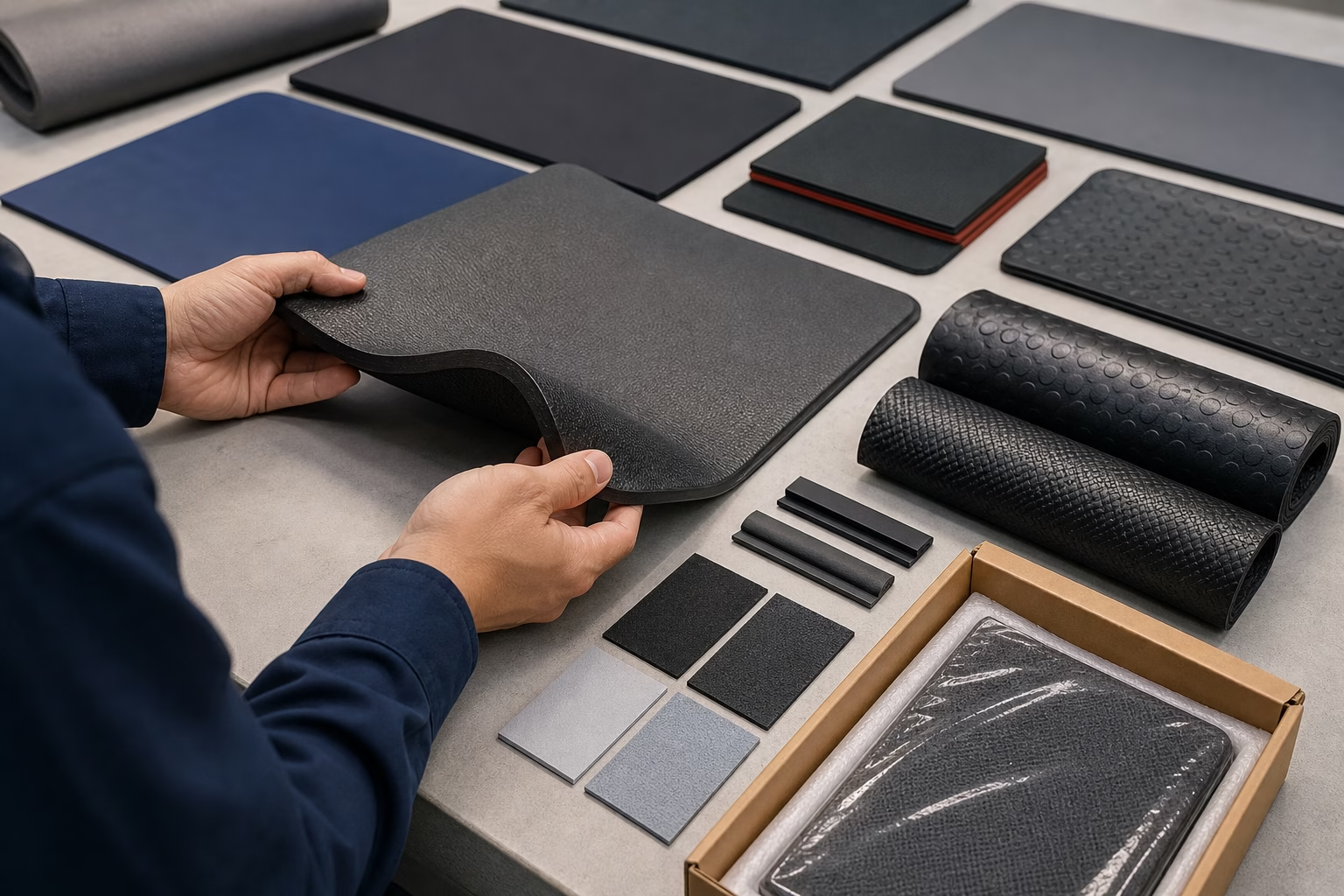
A sample is useful only when its construction and inspection conditions are clear. First establish whether it represents the proposed production construction, or whether it is only a visual or dimensional mock-up. Then compare the sample with the approved brief for fit, displacement, debris retention, pooled liquid, edge interference, surface marking, cleaning behavior and packaging condition.
Measure geometry, thickness and visible finish using the agreed basis from the specification. Where the application requires it, test representative tools, contact areas, loads, handling and cleaning exposure. Record the conditions: sample conditioning, load, contact area, duration, temperature and inspection method. A test method explains how to measure a property; it does not create a universal acceptance threshold.
Sample Inspection Checklist
- Sample identification and construction description.
- Finished length, width, shape, thickness and cut-feature measurements.
- Surface, backing, edge, print and visible-finish observations.
- Application notes covering fit, movement, debris, liquid and cleaning.
- Photographs, deviations, open questions, evidence sources and corrective actions.
- Disposition: approve, approve with a documented deviation, request revision or hold for evidence.
Keep design verification, visual approval and production inspection distinct. A good-looking sample does not by itself prove service life, universal chemical resistance, cut resistance or scratch prevention. When quality records or color consistency matter, align the review with Mat Quality Control and Color Consistency and ask which characteristics are representative of production.
Hypothetical RFQ Preparation Example
An OEM buyer knows the protected workbench area, object placement, finished footprint and quantity tiers, and has a logo and preferred appearance. The buyer has not defined thickness, backing behavior, cleaning exposure, edge details or a measurement basis. The practical decision is to issue a brief separating known requirements from manufacturer-confirmation questions. The next action is to send an annotated drawing, application photographs, artwork, packaging needs and sample evaluation criteria before technical review.
Close the RFQ With Packaging, Shipment and Buyer Approval Inputs
Packaging belongs in the same RFQ as the technical specification because pack configuration can affect edge protection, printed surfaces, cleanliness, flatness and storage orientation. State quantity tiers, pack quantity, individual protection, labels, cartons, pallet preferences and destination. Also identify private-label, barcode, insert, language and outer-carton requirements when they apply to the sales channel.
Separate buyer target dates from manufacturer-confirmed schedules. Ninghow Mats should confirm project-specific sampling, packaging, commercial and shipment inputs rather than treating a preferred format as available by default. Record which items are mandatory, preferred or pending review so quotations are compared against the same assumptions.
Final RFQ Document Request
- Application photographs, placement details, drawing, units, dimensions and quantity tiers.
- Material or grade preferences, exposure information, cleaning instructions and requested evidence.
- Artwork files, color references, print placement, cut lines and edge requirements.
- Sample inspection criteria, approval comments, deviations and open technical questions.
- Packaging brief, labels, destination, shipping constraints and target approval date.
- Manufacturer-confirmed options, unresolved items and final approval record.
Before sending the inquiry, use Custom Mat Sample Development as a reference point for organizing the sample brief and approval questions. A complete request helps Ninghow Mats identify missing inputs before sample development or commercial review; it does not replace project-specific confirmation of construction, tolerances, testing, packaging or schedule.
Frequently Asked Questions
What information should an OEM provide before requesting a custom work-surface mat sample?
Provide the application, protected surface, object placement, operating exposure, finished dimensions, quantity tiers, artwork, packaging needs, destination and target approval date. Separate mandatory requirements from preferences and questions that require manufacturer confirmation.
How should a buyer specify custom mat size, shape, thickness and tolerances?
Use an annotated drawing showing units, datums, usable area, corner details, cut-outs, profile features and placement clearances. State thickness measurement locations, included features, conditioning state, tolerance and the responsible approver.
How should artwork, printing, cutting and edge treatment be approved?
Approve artwork placement, color references, cut geometry, edge appearance and visible layers against a drawing, proof or representative sample. Record inspection lighting, viewing distance and any deviations instead of relying on a general appearance preference.
What should a buyer inspect when reviewing a custom mat sample?
Check fit, movement, surface and backing behavior, geometry, thickness, print, edges, cleaning response and packaging condition. Record the test conditions, measurements, photographs, unresolved questions and final disposition before production release.