
To choose a work-surface protection mat, start with five facts: what surface needs protection, what task happens above it, what moves, what contacts the mat, and how the mat will be cleaned. This sequence helps buyers compare stability, cushioning, cleanability, surface feel, footprint and branding without assuming that one material is suitable for every work environment. Ninghow Mats approaches these projects through application-specific Work-Surface Protection Mat Solutions, with construction, dimensions and finishing confirmed against the buyer’s requirements.
The main risk may be scratching, spilled liquid, impact, debris, displacement or operator fatigue. Record the base surface, usable area, obstacles, load points, contact duration and cleaning routine before comparing rubber, EVA, PVC, silicone or foam-based constructions. Thickness alone does not establish cushioning, load performance or scratch prevention; the finished surface, backing, layer construction and edge treatment must be evaluated together.
Choose the Mat by Surface, Task and Main Risk
Define the protected surface first. A painted workbench, finished counter, assembly table and equipment-contact area may need different checks even when they have similar dimensions. Note whether the surface is smooth, textured, coated, delicate, porous or vulnerable to trapped debris. Then describe the activity above it: tool placement, assembly, inspection, repair, packaging or repeated component handling.
Use this five-question screen before requesting a material recommendation:
| Question | Buyer should record | Why it matters |
|---|---|---|
| What is protected? | Surface finish, condition and usable area | Influences contact, marking and fit checks |
| What happens above it? | Tools, parts, assembly or inspection activity | Identifies contact, debris and impact risks |
| What moves? | Hands, tools, parts, equipment or the mat itself | Determines displacement and edge concerns |
| What contacts it? | Loads, sharp edges, liquids, oils and cleaners | Defines exposure and sample conditions |
| How is it cleaned? | Wiping, washing, chemicals, frequency and access | Reveals texture, backing and handling needs |
Apply a simple decision rule: surface plus task plus exposure plus geometry plus cleaning. Prioritize stability when movement or displacement is the main risk. Prioritize cushioning only when the contact conditions and required support have been defined. Prioritize cleanability when liquids, oils, dust or frequent wiping are unavoidable. Branding should follow the functional decision, because artwork placement and print durability still need construction and cleaning review.
Hypothetical workstation selection example
A buyer needs a custom mat for an assembly bench where tools move frequently and occasional liquid spills occur. The bench finish and usable area are known, and regular cleaning is expected, but tool mass, cleaner chemistry, point loads and acceptable edge height are not documented. The practical decision is to request a representative sample and evaluate surface contact, displacement, indentation, pooled liquid, cleaning and edge interference. The next action is to send Ninghow Mats a measured layout, application photographs, tool details, liquid exposure and cleaning method for construction confirmation. This is an example, not customer performance evidence.
Define Contact, Movement, Cleaning and Exposure Before Material Selection
Material selection becomes more useful when the work environment is described in observable terms. Separate static loading, where an object remains in place, from dynamic loading caused by repeated placement, sliding or retrieval. Identify point loads under equipment feet or narrow tool edges, rounded versus sharp contact points, dropped objects and the areas where operators lean or apply pressure. Displacement means unwanted movement of the mat or the item on it; bottoming out means the construction compresses far enough that its intended cushioning effect is reduced.
Record the exposure conditions that a sample must represent. These may include water, oil, workshop debris, dust, food residue, cleaning agents, temperature and the length of contact. Also note whether the mat can be removed for cleaning, whether its backing could retain liquid, and whether a textured surface might trap debris. A raised edge may help define a work area, but it can also interfere with sliding tools, access or removal.
Do not convert a desired outcome into an unverified performance claim. “Should not move” is a project requirement to evaluate under stated conditions, not automatic proof of anti-slip performance. Likewise, cut resistance, chemical resistance, ESD behavior, electrical insulation and load rating require application-specific confirmation. Provide annotated photographs or drawings showing contact zones, movement paths and cleaning access, together with tool mass, support-foot area and likely point loads.
| Exposure or action | Useful evidence | Decision to record |
|---|---|---|
| Repeated tool movement | Movement path, tool edges and retrieval method | Displacement, surface marking and edge interaction |
| Liquids or cleaners | Substance, concentration, temperature and frequency | Cleaning method, staining and liquid retention |
| Point contact or impact | Mass, contact area and placement pattern | Indentation, bottoming out and sample test conditions |
| Dust or debris | Particle type and removal process | Texture, trapped debris and cleaning access |
Compare Material, Layer Construction, Surface and Backing by Function
Compare rubber, EVA, PVC, silicone and foam-based options against verified needs for grip, flexibility, cushioning, cleaning, surface feel and exposure. A material name is only a starting point. Ninghow Mats should confirm the available grade, finished construction, backing, total thickness and relevant sampling options for the stated application rather than assigning performance from the material label alone.
A mat may be a one-piece body or a layered construction. Possible layer roles include a protective contact surface, barrier or reinforcement, cushion and grip base. Confirm the role of each layer, its material grade, bonding method, surface texture and compatibility with the protected surface. Component-layer values cannot simply be added to predict the finished product, because bonding, compression and surface finishing affect the final construction.
Use samples to compare surface marking, grip, debris retention, liquid behavior, handling and cleaning. Supplier data can help identify a material grade or explain a test method, but it does not automatically establish the acceptance limit for the finished mat. ASTM D2240, ISO 4649, ASTM D3574, ISO 3386-1 and ISO 2439 may be relevant methods for hardness, abrasion or foam properties when applicable; the project must still define the property, specimen, conditioning and pass/fail decision.
| Selection factor | What to compare | What requires confirmation |
|---|---|---|
| Contact surface | Marking, feel, texture and debris retention | Compatibility with the protected surface |
| Backing | Grip, removal, liquid behavior and cleaning access | Available grade and finished construction |
| Cushion or reinforcement | Indentation and handling under representative contact | Load conditions and acceptance criteria |
| Surface and layers | Cleaning, flexibility and visual appearance | Bonding method, total thickness and tolerances |
Keep common-market or supplier-referenced dimensions and thicknesses as context only. They are not Ninghow Mats stock sizes, guaranteed capabilities or acceptance criteria. The buyer and manufacturer should agree the required property, evidence, measurement basis and unresolved risk before a construction is approved.
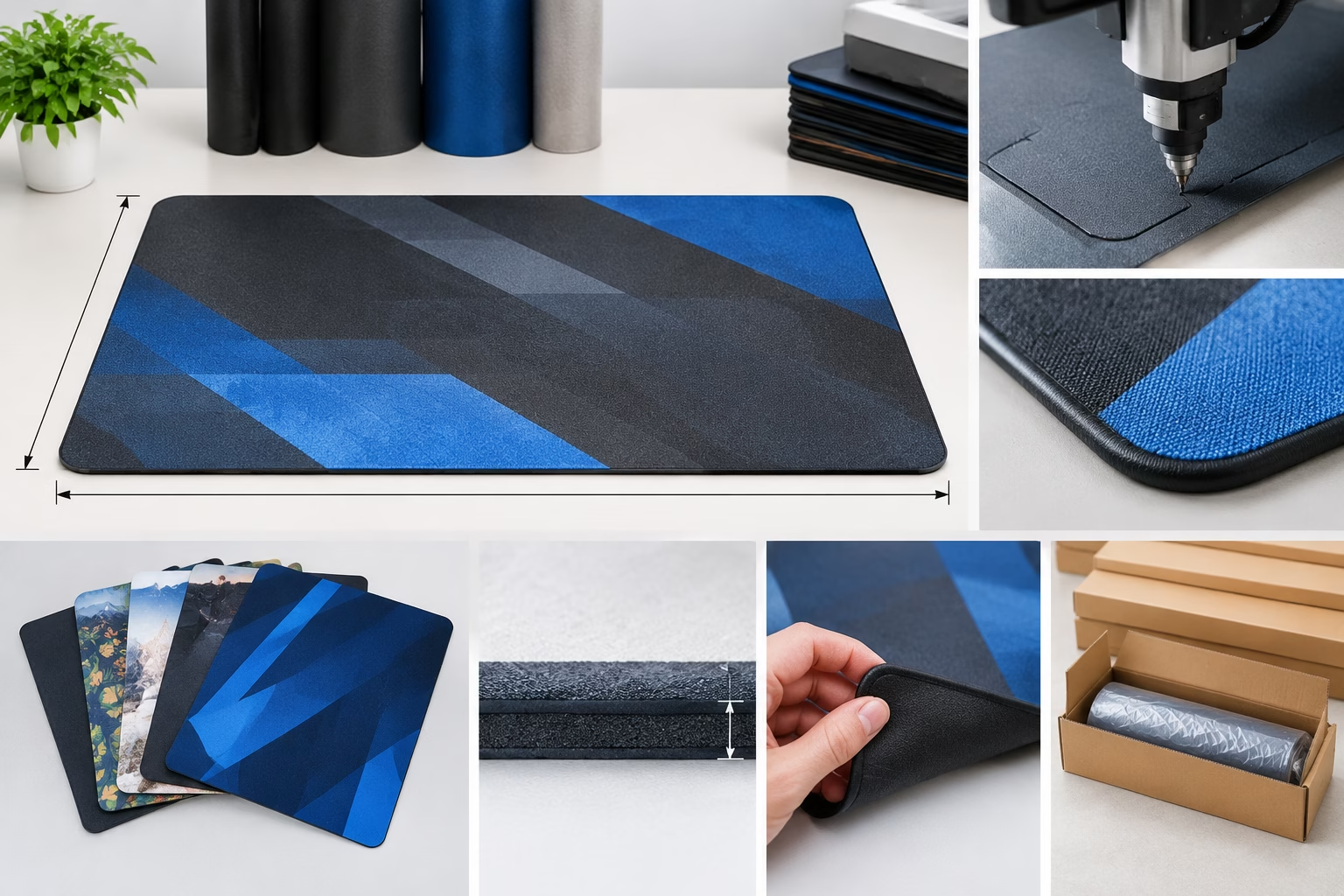
Specify Footprint, Thickness, Cutting, Edges and Printing
A workable custom mat specification begins with the finished layout, not only a nominal size. Provide the protected surface, usable work area, clearances around tools, corners, cut-outs, raised features and the path needed to remove the mat for cleaning. Use one measurement system throughout the drawing and identify any areas that must remain accessible.
Measurement worksheet for a custom work mat
- Finished width and length, measured edge-to-edge after the agreed conditioning period.
- Usable work area, clearance from obstacles and locations of cut-outs or raised features.
- Total finished thickness, separated from surface texture, backing and edge features.
- Corner form, edge profile and any access, liquid-containment or removal concerns.
- Artwork location, print area, colors, scale, registration expectations and approval method.
- Measurement locations, project tolerances and the evidence used to approve each item.
Thickness should be recorded as a finished-product dimension, not assumed from the thickness of individual layers. Surface texture, backing, bonding and edge treatment can affect the final construction. Common market dimensions or thicknesses may provide context, but they do not establish Ninghow Mats stock availability, capability or acceptance limits. Ask Ninghow to confirm the available size, cutting, thickness, edge and printing options for the actual layout.
Choose a flat, bevelled or raised edge according to the work process. A raised boundary may help define an area or retain liquid, but it can interfere with sliding tools, access or cleaning. A bevel may improve transition at the boundary, while a flat edge may simplify removal. These are application decisions that should be checked against the representative surface and movement pattern.
Evaluate Samples and Set Quality-Control Acceptance Criteria
A sample is useful only when it is evaluated under conditions that resemble the intended work area. Place it on the actual or representative surface and use the relevant tools, movement, liquids, debris and cleaning steps. A product photograph or illustrative sample can show appearance, but it cannot establish fit, cleanability, displacement or finished-product repeatability.
Hypothetical workstation selection example
A buyer has a painted assembly bench with a known usable area and frequent tool movement. Occasional liquid spills and regular wiping are expected, but the cleaner chemistry, tool point loads, backing compatibility and acceptable edge height are still unknown. The practical decision is to treat the first sample as an evaluation of contact, movement, indentation, pooled liquid, cleaning and edge interference, rather than proof of universal performance. The next action is to send the manufacturer a measured layout, tool details, exposure information, cleaning method, photographs and proposed acceptance observations.
Sample inspection checklist
- Fit: Measure the finished footprint, cut-outs and clearances at agreed locations.
- Function: Check flatness, displacement, indentation, handling and interaction with real tools or parts.
- Surface: Observe marking, debris retention, liquid pooling, staining and cleanability.
- Edges: Check interference with access, removal, movement and surrounding work areas.
- Printing: Compare artwork location, color appearance, registration and surface condition after cleaning.
- Records: Note the sample identity, construction description, test conditions, photographs, defects and approval status.
Separate visual approval, functional approval and production approval. Each drawing, artwork file, physical sample and packaging brief may have its own identifier, revision and approval date. A single release log should cross-reference the exact versions reviewed and approved together. Agree which construction, artwork, dimensional or packaging changes require a new sample before production.
For project-specific sampling and development discussions, buyers can review Custom Mat Sample Development. Request manufacturer inspection details and application-specific evaluation records rather than treating a general material description as a performance guarantee.
Prepare the RFQ, Packaging and Production-Release Brief
A strong RFQ gives the manufacturer enough application, product and commercial context to identify missing information. Include the protected surface, task, exposure, finished dimensions, units, construction preference, quantity tiers, artwork status, packaging expectations, destination and target date. Keep commercial questions separate from technical acceptance decisions.
Copyable RFQ and specification brief
- Application: What surface is protected, what work occurs above it, and what is the main risk?
- Geometry: Finished dimensions, usable area, corners, cut-outs, clearances, edge profile and removal path.
- Construction: Preferred material or layer concept, surface texture, backing, total thickness and unresolved compatibility questions.
- Exposure: Tools, point contacts, liquids, cleaners, oils, temperature, debris, movement and contact duration.
- Branding: Artwork, print location, colors, scale, approval artwork and visual acceptance basis.
- Verification: Sample checks, measurement conditions, photographs, required test methods and acceptance criteria.
- Packaging and shipment: Individual protection, stacking, labels, carton or pallet expectations, destination and handling conditions.
- Commercial confirmation: Available options, sampling, quantity requirements, MOQ, lead time and project-specific testing, all subject to manufacturer confirmation.
Before production release, align the approved specification, artwork, sample, inspection basis and packaging instructions. Packaging and shipment conditions can affect how the finished mat is inspected, stored and received, so they belong in the approval record rather than being left as informal assumptions.
Use a plain-language release log with named approvers, open decisions and the separate revision and approval status of each drawing, artwork file, sample, specification and packaging instruction. Ninghow Mats should confirm the applicable materials, construction, finishing, sampling, packaging and commercial details for the specific project.
For related quality-control and evidence context, see Mat Quality Control and Color Consistency.
Frequently Asked Questions
How do I choose a work-surface protection mat for a workbench or assembly area?
Start with the protected surface, task, movement, contact points, cleaning routine and main risk. Then define the footprint, construction, backing, edges and evidence needed to approve a sample.
Should I choose the material before defining the work environment?
No. Material names do not establish finished-product behavior. Describe the task and exposure first, then compare confirmed constructions against the application.
Does a thicker work mat always provide better protection or cushioning?
No. Finished behavior also depends on material grade, layer construction, bonding, backing, contact area and loading conditions. Evaluate the complete construction under representative use.
How should I measure a custom work-surface mat?
Provide finished width and length, usable area, clearances, corners, cut-outs, edge details and removal paths. Agree measurement locations, conditioning and tolerances before approval.
What should I check when evaluating a mat sample?
Check fit, flatness, movement, indentation, surface marking, debris, liquid behavior, cleaning, edge interference, print appearance and the completeness of the inspection record.
How do backing and edge treatment affect movement and cleaning?
They can influence grip, removal, liquid behavior, debris access and interference with nearby work. Compare them on the actual surface and against the intended handling routine.