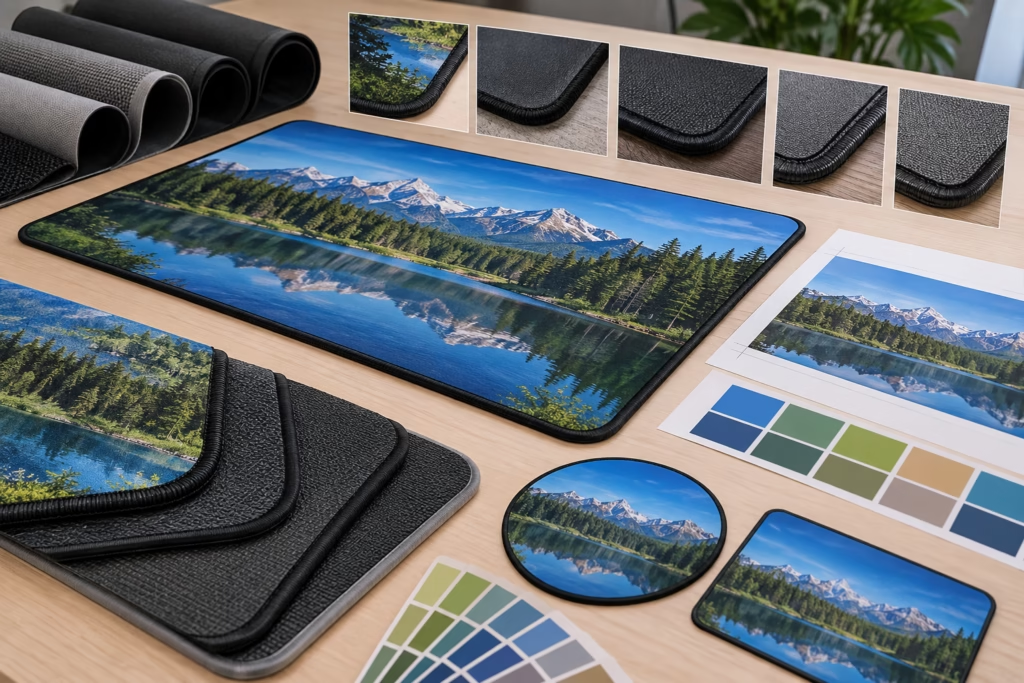
A production-ready brand color specification for custom printed mats connects each color to its purpose, artwork location, finished construction and approval record. Before requesting a quote, proof or sample, provide the application, dimensions, layer construction, surface, backing, print area, brand color references, artwork revision and approval contact. The manufacturer-side inspection and consistency process should remain connected to documented records, such as Mat Quality Control and Color Consistency.
A color code is a controlled reference for review, not a universal guarantee of the finished physical color. Surface texture, backing, lighting, viewing angle, print coverage and surrounding colors can change how a color appears. Ninghow Mats can assess color as part of a complete custom mat specification, while available materials, grades, construction, edges, dimensions, thickness and printing compatibility require manufacturer confirmation.
What a Production-Ready Brand Color Specification for a Custom Mat Includes
Start by naming every color and defining its role. “Blue” or “match the website” is not enough for a commercial production review. Identify whether the color is a primary brand color, secondary color, accent, background, logo color or one-color treatment, then provide the approved reference codes from the current brand guide.
Also state where each color belongs. A requirement may apply to the printed face, base material, backing, edge, label, packaging or several branded surfaces. This distinction matters because the same reference may be reviewed differently when it appears in printed artwork, an exposed material or a packaging component.
Color review should be tied to the intended product rather than an isolated screen image. Record the application, placement surface, viewing distance, user contact, cleaning context and sales channel. A counter mat viewed at close range has different readability and presentation priorities from a promotional mat displayed at a greater distance.
Include the physical specification alongside the color information: finished length and width, shape, units, thickness target or range, layer construction, surface, backing, edge treatment and usable print area. Material names alone do not define a finished mat. Actual grades and constructions need to be assessed for appearance and compatibility with the proposed artwork.
Reusable color-specification template
| Field | Buyer input | Approval record |
|---|---|---|
| Project and application | Project ID, mat use, placement surface and viewing context | Open questions and responsible owner |
| Finished construction | Dimensions, shape, thickness, layers, surface, backing and print area | Manufacturer-confirmed option or unresolved limitation |
| Color intent | Color name, functional role, reference codes and physical swatch details | Nominated master reference |
| Artwork control | File name, orientation, revision and placement drawing | Proof or sample ID and approval status |
| Approval control | Approver, requested review method and open decisions | Approval date, revision action or sign-off |
Keep buyer requirements separate from manufacturer-confirmed options. The buyer controls brand intent, artwork, application and approval ownership. The manufacturer confirms which materials, surfaces, printing methods, proof methods, sizes, thicknesses and edge treatments apply to the requested construction.
HEX, RGB, CMYK or Pantone: Choose the Right Color Evidence
HEX and RGB primarily communicate screen-based color values and digital brand-guide intent. CMYK is more closely associated with process-print artwork, but it still does not predict every physical mat result. The printing process, surface, decoration system, construction and color coverage all influence the finished appearance.
A Pantone reference can provide a useful controlled identifier or physical comparison point when it is relevant to the selected process and surface. It is not automatically available or directly transferable to every mat construction. When several references are supplied, nominate one as the master approval reference and label the others as translations or supporting information.
| Reference | Normal use | Useful buyer input | Physical-mat limitation | Buyer action |
|---|---|---|---|---|
| HEX | Web and digital brand communication | Current digital brand-guide value | Does not represent a finished substrate by itself | Send it with other available references |
| RGB | Screen-based design and display | Source artwork or digital brand value | Screen brightness and color settings affect appearance | Do not use the monitor as the sole approval reference |
| CMYK | Print-oriented artwork preparation | Artwork conversion and intended print values | Result depends on process, surface and construction | Request process-specific confirmation |
| Pantone | Controlled color reference where applicable | Reference identifier or physical swatch source | Relevance depends on the process, library and surface | Confirm whether it can control the project review |
The practical reference chain is: approved brand guide, digital values, artwork preparation, proof or sample, then an approved production reference. For a commercially critical color, provide a physical swatch, approved finished sample or manufacturer-confirmed proof with its source, revision and approval status. A digital value can communicate intent, but a finished sample allows the buyer and manufacturer to evaluate that intent on the selected construction.
Two hypothetical buyer decisions
Hypothetical private-label desk-mat buyer: the buyer has a digital brand guide with HEX, RGB and CMYK values but no physical swatch. The useful decision is to nominate the brand-guide color as the initial master reference, submit the artwork and request confirmation of the applicable proof method after the surface and construction are selected.
Hypothetical counter-mat importer: the buyer has an approved physical swatch but flexible digital artwork. The swatch becomes the primary comparison reference, while the artwork values support file preparation. The trade-off is that the manufacturer still needs to assess how the selected surface, print process and construction represent that swatch.
Color evidence boundary: Do not silently replace an approved reference through automatic code conversion. When digital values, print references and physical samples conflict, record the conflict and obtain an agreed master reference. Exact matching, fixed tolerances and universal code hierarchies require documented project evidence.
Build the Color Brief Around the Mat Material and Layer Construction
A color brief becomes useful when it describes the finished mat that will actually be reviewed. Define the application first: desk, counter, tabletop, floor or another setting. Record placement orientation, viewing distance, user contact and cleaning context, because these variables affect legibility, appearance priorities and the way a surface is evaluated.
Describe the layer construction as an ordered combination of face, printed or decorative layer, core or cushioning layer, backing and edge treatment where applicable. Add the preferred material or grade, surface texture or finish, backing, lamination and any other construction feature that may influence perceived color. Surface texture, gloss, pile, compression and backing should remain consistent when references are compared.
Specify finished length, width, shape, units, thickness target or range, corner treatment, cut-outs and usable print area. Separate requirements for the printed face from requirements for the underside, edge, base material, label and packaging. Mark full-bleed areas, logo zones, safe areas, gradients, photographic elements, transparent areas, small text and repeat patterns on a drawing or supplier template.
Color-ready specification brief
- Application: use environment, placement surface, viewing distance and sales channel.
- Finished product: dimensions, shape, units, thickness, layer stack, surface, backing and edges.
- Artwork: print zone, orientation, color references, graphic effects and artwork revision.
- Evidence: requested proof or sample type, comparison reference, approval owner and review conditions.
- Decision control: buyer requirements, manufacturer confirmations, open limits and approval status.
Do not transfer assumptions between counter mats, mouse pads, promotional mats and other applications. The same color brief does not establish the same visual or functional result. Compare candidate finished constructions under consistent conditions, and ask the manufacturer to confirm available materials, grades, construction, dimensions, thickness ranges, edges and printing compatibility before treating the brief as production-ready.
Prepare Artwork, Cutting and Edge Details for Meaningful Color Review
A useful artwork handoff represents the intended finished mat, not only an image on a screen. Provide the current editable source file where available, a clearly labeled preview at the intended dimensions, the brand guide, and the approved color-reference package. The preview helps the manufacturer assess scale and placement, while the source file may be needed for technical preparation.
Identify the artwork file name, revision, orientation, finished size, print area and placement reference points. Define the trim line as the intended finished edge, the safe area as the zone where important text and logos remain protected, and bleed as artwork extending beyond the trim line when the selected process requires it. Bleed and safe-area requirements are process-dependent, so the manufacturer should confirm them rather than relying on a universal value.
Show how the design interacts with corners, cut-outs, seams, trim lines and edge treatments. State whether color should continue toward the edge or stop before it. Flag gradients, photographs, overprints, transparent elements, fine lines, small text and close color relationships for additional review. A digital mockup is not a physical color proof, and an AI-generated illustration is not evidence that a printing process can reproduce the design.
- Source artwork and labeled preview
- Finished dimensions, orientation and print area
- Edge, trim, cut-out and corner references
- Color codes, swatch information and master reference
- Transparency, gradient, photographic and fine-detail flags
- Artwork revision, approver and requested proof type
Use the same revision identifier across the artwork, specification drawing, color brief, proof, sample and approval record. This prevents a later file, changed edge detail or altered print area from silently replacing the version that was reviewed.
Evaluate the Proof or Sample Against Agreed Reference Conditions
Color approval becomes more useful when the comparison conditions are recorded. Identify the proof or sample ID, artwork revision, finished construction, nominated color reference, reviewer and date. Record whether the comparison is against a physical swatch, approved sample, proof or digital file, and note the viewing orientation, approximate distance and lighting context when these affect the decision.
Review the complete item rather than the printed face alone. Check color relationships, surface finish, backing, edges, flatness, dimensions, thickness, artwork placement and packaging presentation where applicable. A surface texture, backing or construction change can alter how a color appears even when the artwork value remains unchanged.
| Requirement | Reference or condition | Observed result | Status | Owner and action |
|---|---|---|---|---|
| Brand color | Master code, swatch or approved sample | Record the observed comparison | Approved, revise or awaiting information | Identify the responsible approver |
| Artwork placement | Drawing and current revision | Check orientation, scale and print zone | Approved, revise or awaiting information | Record the required correction |
| Construction | Agreed surface, backing, thickness and edges | Inspect the finished sample | Approved or awaiting testing | Assign technical follow-up |
| Packaging | Approved label and packaging specification | Check presentation and identification | Approved or revise | Record change-control owner |
Do not mark an untested requirement as passed. A visual review and an instrumental measurement answer different questions, so any measurement method, tolerance, visual standard or color-difference threshold needs agreement between the buyer and manufacturer. The retained proof or sample should remain connected to the final artwork and production specification.
Color approval confirms the reviewed reference under the stated conditions. It does not, by itself, establish service life, cleaning resistance, chemical resistance or consistency across an entire production batch. Those claims require separate evidence or testing.
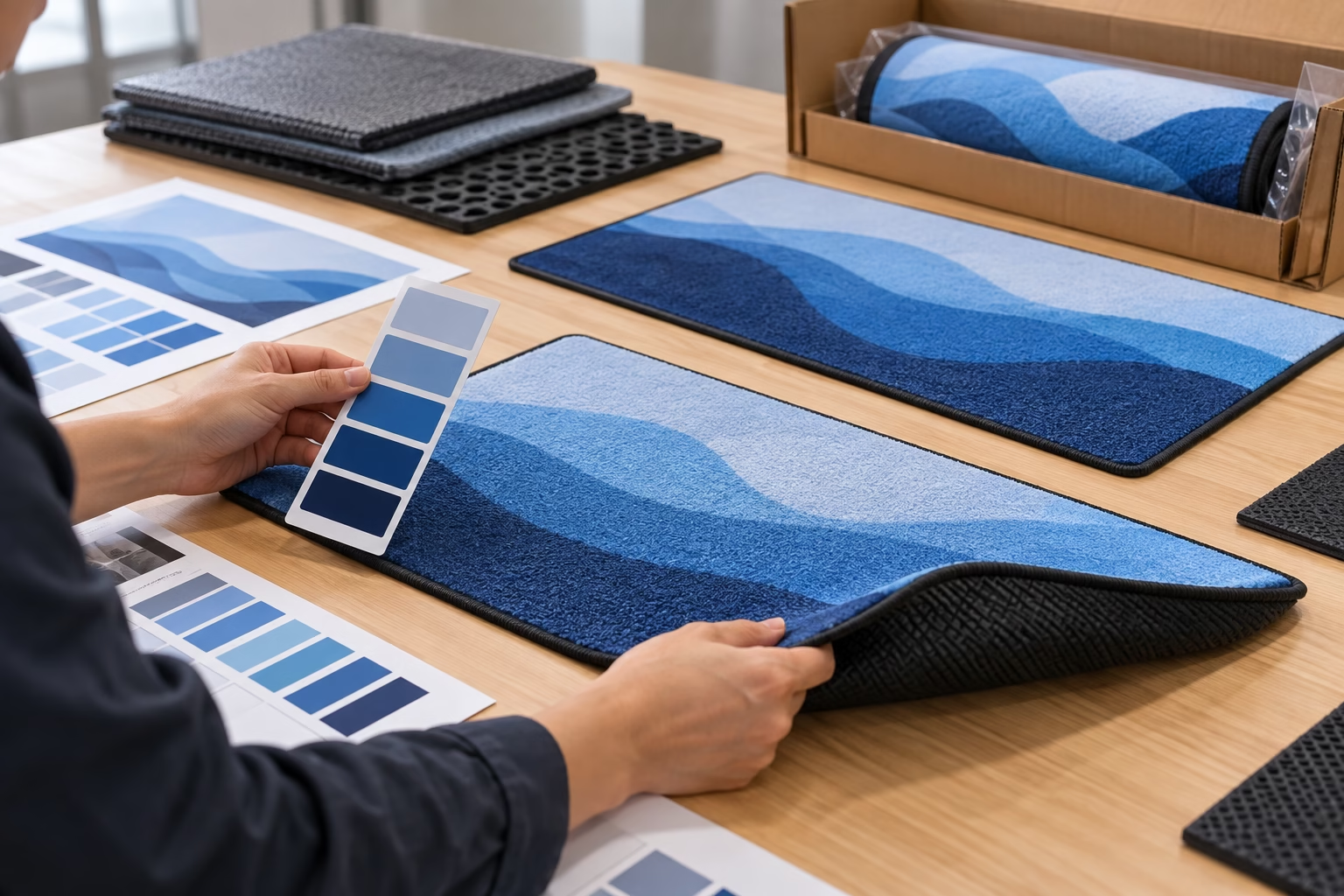
Use a Pre-Quote and Bulk-Approval Checklist That Prevents Color Ambiguity
Before requesting a quotation or technical review, assemble one controlled document set. Include the application, placement surface, finished dimensions, shape, thickness, layer construction, material preference, surface, backing, edge treatment and print areas. Attach the brand guide, color names, available HEX, RGB, CMYK or Pantone references, physical swatch details, artwork files, artwork revision and approval contact.
Also state quantity tiers, packaging format, labeling, destination market, sales channel, requested proof or sample and target approval date. These are buyer inputs for evaluation, not supplier promises. Ask the manufacturer to identify missing information, process limitations, applicable proof method and any construction or artwork decision that requires confirmation.
Before bulk approval, confirm the approved color reference, finished construction, artwork revision, inspection records, packaging specification and change-control owner. Keep revised artwork, changed thickness, altered backing and new packaging instructions within the same controlled record so they cannot replace the approved specification without a documented decision.
Explanatory scenario: An OEM buyer has a fixed brand guide and approved logo, but the surface and backing are undecided. The evidence available is strong for color intent but incomplete for the finished product. The practical outcome is Clarify: compare candidate constructions and review the color on the selected finished mat before approving the reference.
For a qualified custom mat enquiry, send the color guide, artwork package, construction drawing, proof or sample request, approval contact and any packaging requirements together. This gives the manufacturer a clear basis for identifying open decisions and confirming which inputs apply to the selected product.
For the related sample and development process, see Custom Mahjong Mats.
Frequently Asked Questions
Should I send HEX, RGB, CMYK or Pantone colors for a custom printed mat?
Send every available reference from the approved brand guide, then identify one master approval reference. Digital values, print references and physical samples serve different purposes, so the manufacturer should confirm which evidence applies to the selected process and surface.
Can a custom printed mat match my brand color exactly?
A color code is a reference for review, not a universal guarantee of the finished physical color. Surface, texture, backing, lighting, print coverage and construction can affect appearance. Use an agreed proof or finished sample when the color is commercially critical.
Do I need to provide a physical color swatch for a custom mat project?
Not every project requires one, but a physical swatch or approved finished sample can provide stronger evidence than a screen image when color is important. Record its source, revision and approval status so the comparison reference remains clear.
Why can the same brand color look different on different mat surfaces?
Texture, gloss, compression, backing, surrounding colors, viewing angle and lighting can change perceived appearance. Color should therefore be reviewed on the intended finished construction rather than transferred from one mat type to another.
Should the color specification include the mat material, backing and thickness?
Yes. These details connect the color requirement to the physical product being reviewed. Material names alone are insufficient; the surface, backing, thickness, layer order, edges and printing compatibility may require manufacturer confirmation.
What should be included in a custom mat color approval document?
Include the project and artwork revision, color references, proof or sample ID, finished construction, viewing conditions, observed result, status, approver, date, open questions and change-control action. Keep the approved record linked to the final production specification.