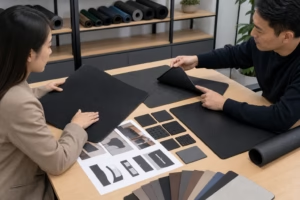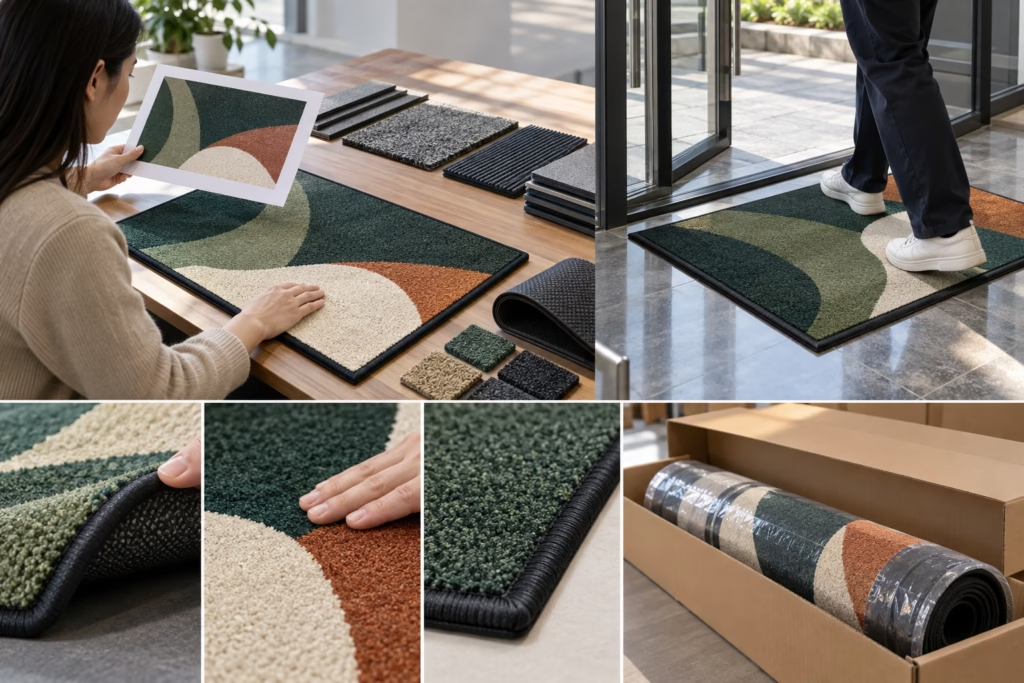
Approve a custom mat preproduction sample only when it matches the current written specification, approved artwork, intended application and agreed finishing requirements, with every exception documented. This written release is evidence that the reviewed requirements are accepted; it does not prove that every bulk unit will be identical or that untested durability, regulatory or performance requirements have passed. Keep sample approval separate from later Mat Quality Control and Color Consistency checks.
For Ninghow Mats, a useful review begins with a complete application and specification brief. The buyer and manufacturer need the same reference documents, the same revision information and a named decision owner. Review each requirement as approved, revise or clarify, or pending test or evidence instead of relying on one overall impression such as “looks good.”
Approve the Sample Only Against the Current Product Specification
A preproduction sample is a physical representation of the proposed finished mat. It lets the buyer compare the actual construction, appearance and fit with the agreed product brief before bulk production is authorized. The minimum reference set normally includes the application brief, dimensional drawing, material and layer description, approved artwork or proof, finishing requirements, packaging instructions and current revision record.
Begin by matching the sample to those documents, then inspect the product, test the application where relevant, record evidence, close open items and issue written release. A deviation is a difference between the sample and an agreed requirement. A corrective revision changes the sample or supporting documents; a conditional approval accepts a defined exception while identifying what remains open.
| Review status | What it means | Production consequence |
|---|---|---|
| Approved | The requirement matches the reference and the evidence is recorded. | It may proceed as part of the released specification. |
| Revise or clarify | The sample differs, or the requirement is too vague to judge. | Correction, written clarification or buyer disposition is needed. |
| Pending test or evidence | Visual review is insufficient for the requirement. | Do not mark the attribute passed until the agreed method and result are available. |
The buyer should identify the person authorized to approve the product and release production. The manufacturer contact should be responsible for responding to discrepancies, confirming whether a change is feasible and identifying any revised sample or document. Ninghow Mats can review a sample more accurately when the application, specification and acceptance criteria are complete, but available materials, construction, printing and finishing options require confirmation for the specific project.
Confirm the Application, Material and Layer Construction Before Judging the Sample
A sample can look attractive while being unsuitable for its actual use. Start with the environment: placement surface, user contact, objects or equipment placed on the mat, cleaning exposure, storage, movement, load or compression and normal viewing distance. These conditions determine which characteristics deserve attention and whether a visual inspection is enough.
Compare the specified material or grade with the finished layer construction. Record the top surface, printed or laminated layer, core or cushioning layer and backing where applicable. Inspect layer alignment, bonding, bubbles, delamination, exposed edges and uneven transitions. “Delamination” means that bonded layers are separating; it is a construction issue, not merely a cosmetic preference.
Then assess the behavior that matters in the application. A desk mat may need to be judged with the intended desk surface and devices. A counter mat may require checks for contact, cleaning, display orientation and backing movement. A cushioning product may need an agreed load, contact area and observation period. Surface feel, flexibility, firmness, grip and recovery should be recorded under stated conditions rather than inferred from a material name alone.
Construction Decision Brief
| Requirement | Why it matters | Evidence to record | Open risk |
|---|---|---|---|
| Material or grade | May affect feel, cleaning, appearance or compression. | Specification, supplier information or sample comparison. | Actual grade is not identified. |
| Layer construction | Controls the finished feel, bonding and stability. | Layer description and photographs of visible transitions. | Sample differs from the agreed stack. |
| Surface and backing | Influences contact, movement, grip and cleaning. | Application notes using the intended substrate. | Suitability is being inferred from appearance. |
The buyer and manufacturer need to agree the target behavior and evaluation method for any performance-related requirement. Raw-material information alone does not establish finished-product performance, and no universal material, thickness or performance limit applies to every mat category.
Measure Dimensions, Thickness, Shape and Edges Against Defined References
Use the current dimensional drawing or specification as the reference for overall length, width, thickness, shape, corner radius, cut-outs, holes, slots, orientation and usable area. Record the units, measurement points and reference edges. A dimension without a datum or measurement method can produce disagreement even when both parties believe they are measuring correctly.
For a repeatable inspection, stabilize the sample under the agreed conditions, use the agreed instrument, measure the defined points and record the result with photographs where useful. Check whether the mat lies flat, curls, warps or shows local thickness variation. Also test fit against the intended desk, counter, tabletop, floor area, device layout or package.
Inspect cutting and edge treatment separately from the dimensions. Look at trimming, binding, stitching, sealing, corner treatment and visible transitions against the specified finish. Ninghow Mats offers relevant cutting and finishing capabilities only where the method and availability are confirmed for the project. The discussion should use agreed references and acceptance criteria, not assumed manufacturer tolerances.
Dimensional Inspection Checklist
- Overall size, units and measurement locations
- Thickness and any defined local measurement points
- Shape, orientation, radius and cut features
- Flatness, curling, warping and fit
- Edge binding, stitching, sealing, trimming and corners
- Photographic evidence for any measured or visible deviation
Separate a measured deviation from a personal preference. For each difference, ask whether it affects assembly, use, packaging, appearance or safety, then assign an owner for the disposition. A measurement method is not automatically a manufacturer acceptance criterion; the buyer and manufacturer must agree what result is acceptable for the project.
Review Surface, Backing, Artwork, Color and Print Appearance Together
Printed mat proofing should compare the physical sample with the approved artwork or physical proof, not only with a screen image. Check artwork placement, scale, orientation, logo proportions, text legibility, image detail, print boundaries and safe areas. Record the artwork revision used for the comparison so a later file change cannot be mistaken for a production defect.
Review color under a defined viewing condition and note the agreed color reference, visual expectation or project-specific tolerance when one exists. Also inspect how print interacts with surface texture, seams, lamination, gloss, backing show-through and edge cutting. Screen approval cannot reveal every effect caused by the finished material or construction.
| Review area | Reference | Observed result and evidence | Decision |
|---|---|---|---|
| Artwork and placement | Approved file or proof | Scale, orientation and position photographs | Approved, revise or clarify |
| Color and legibility | Defined viewing condition and color expectation | Physical comparison and notes | Approved or pending evidence |
| Surface and backing | Construction and application brief | Feel, movement, contact and cleaning observations | Approved, revise or clarify |
Use the intended equipment, desk, counter or substrate when surface feel, mouse movement, tactile contact, grip or cleaning response matters. Check the backing for movement, visible defects and contact compatibility, but do not infer slip certification or suitability from appearance alone. Print approval also does not waive dimensional, construction, packaging or functional review.
Test Intended-Use Behavior and Separate Visual Approval From Quality Control
A sample can look correct and still be unsuitable for its actual application. Test the attributes that matter commercially using the intended placement surface, typical objects or devices, representative handling and the agreed cleaning method where practical. Depending on the product, this may include fit, stability, grip, comfort, mouse movement, object support, cushioning, compression response or flatness after storage.
Before testing, define the reference condition: the surface, sample preparation, equipment, load or contact area, duration, environment and observation method. Record the sample identity, test setup, observations, photographs and result. “Feels good” is useful feedback, but it is not a repeatable acceptance criterion without context.
| Review status | What it means | Action |
|---|---|---|
| Approved | The attribute matches the agreed requirement under the recorded conditions. | Retain the evidence and continue the release review. |
| Revise or clarify | The sample differs from the specification, or the requirement is too vague to judge. | Request a correction, written explanation or buyer decision. |
| Pending test or evidence | The sample has not established a performance, regulatory or technical claim. | Name the method, owner and evidence needed before marking it passed. |
Keep visual sample approval separate from bulk-lot inspection and formal quality-control work. A sample may pass appearance checks while durability, chemical resistance, slip performance, compression recovery or color consistency remains untested. A test result also applies to the stated sample, construction and conditions; it does not automatically prove service life or the performance of every bulk unit.
For a custom mat project, Ninghow Mats needs the application-specific targets and test conditions before confirming suitable materials, construction or evaluation methods. A buyer requiring a regulated or performance claim should request the applicable test method, conditions, result, sample description, date, acceptance criterion and responsible reviewer.
Approve Packaging, Labeling and the Retail or Distribution Presentation
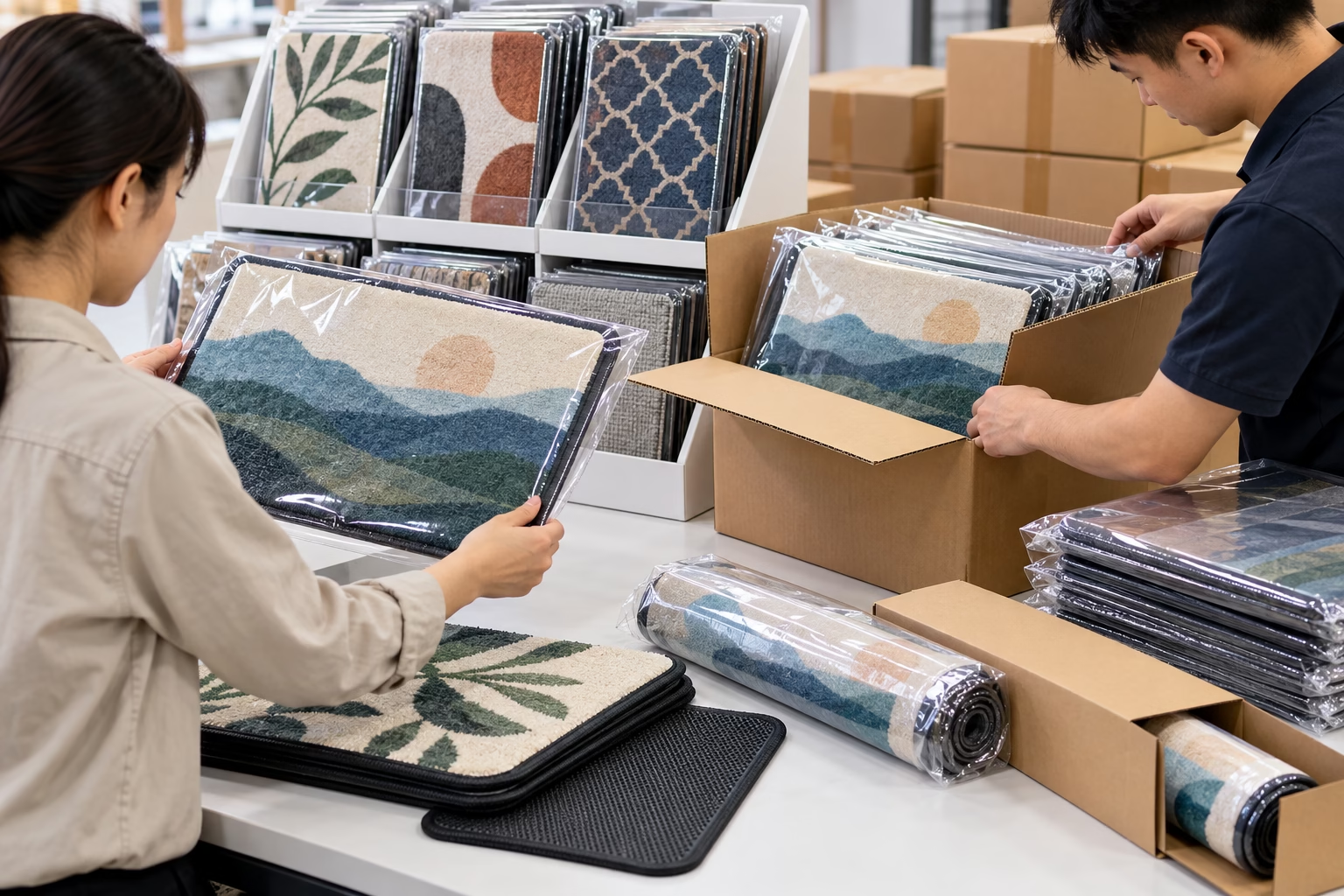
Packaging is part of the approval when the mat will be sold, distributed or delivered as a private-label product. Compare the physical package or clearly marked mock-up with the approved packaging brief. Check the protective material, folding or rolling method, inserts, labels, branding, carton markings and shipping information that apply to the project.
Confirm that the package fits the mat and protects its shape, print, surface and edges during the agreed storage and handling conditions. Packaging fit and visual presentation do not, by themselves, establish transport durability. If shipment risk matters, agree on the relevant transport requirement or test separately.
Packaging sign-off checklist
- Protection: Does the packaging prevent avoidable contact or damage to the surface, print and edges?
- Fit: Does the folded, rolled or otherwise configured mat fit without an unapproved deformation?
- Presentation: Are the branding, inserts, language and assembly details approved?
- Labeling: Are required labels, carton information, barcodes or shipping marks confirmed for the destination?
- Status: Is each component approved production packaging, a mock-up, a placeholder or pending review?
Separate product approval from export documentation, destination-market obligations and transport testing. Provide the manufacturer with the destination, packaging configuration, labeling requirements, quantity per carton and presentation expectations. Ninghow Mats can then confirm which packaging and export requirements apply to the specific project; no standard package should be assumed.
Close Revisions and Issue Written Bulk-Production Release
Close the review with one record connecting each observation to the requirement, evidence, requested action, responsible party and status. The specification, drawing, artwork, packaging brief and corrected sample should carry the same revision reference and date so an outdated file cannot be mistaken for the approved production basis.
Reusable approval record
| Review area | Required record |
|---|---|
| Application and construction | Use conditions, material or grade, layer description and open performance checks |
| Dimensions and finish | Units, measurement points, observed result, photographs and disposition |
| Artwork and print | Approved artwork reference, placement, color expectation and physical observations |
| Packaging | Configuration, labels, presentation state and destination-specific inputs |
| Release decision | Status, exceptions, pending controls, authorized approver and date |
Request a corrected sample when a change affects construction, dimensions, print, finish, packaging or intended use. If correction is unnecessary, record the clarification or exception and identify who accepted it. Recheck the final sample and associated documents after every relevant revision. Do not mark an untested requirement as passed or rely on an informal message as bulk-production approval.
Written release should identify the approved specification, sample, artwork, packaging state, open tests, accepted exceptions and authorized buyer. Retain the approved reference sample and review evidence for repeat orders, incoming inspection and future change discussions. For project review, prepare the application, specification, artwork, packaging requirements, sample observations and open questions; Ninghow Mats can confirm project-specific sampling and production details through its order guide for samples and production planning.
For related product and application context, see Laser Cutting, Die Cutting and Edge Finishing.
Frequently Asked Questions
What is a custom mat preproduction sample approval?
It is a documented comparison of a physical sample with the current product specification, intended use, approved artwork and packaging requirements before bulk production is released. It does not prove that every untested performance attribute or bulk unit will be identical.
Which details should I check before approving a bulk mat order?
Check intended-use behavior, material and layer construction, dimensions, thickness, shape, surface, backing, artwork, print appearance, edges, packaging and all open tests. Record the reference, observed result, evidence and decision for each applicable requirement.
What documents should a manufacturer and buyer compare during sample approval?
Compare the application brief, dimensional drawing, material and construction description, approved artwork or proof, finishing requirements, packaging brief and current revision record. Keep the same revision reference and date across related documents.
Should I approve a printed mat from a screen image or a physical sample?
A screen image can help review artwork, but it cannot establish the finished material, texture, scale, surface interaction, backing or packaging. Use the approved artwork together with a physical sample reviewed under documented viewing and application conditions.
How should I check dimensions, thickness and edge treatment on a custom mat sample?
Stabilize the sample, use the agreed instrument and measure the defined points in the stated units. Record the reference edge or datum, photographs and conditions. Compare the result with the project requirement rather than an assumed universal tolerance.
What should I do if the sample uses a different material, layer construction or backing than specified?
Place the item in “revise or clarify” status. Ask the manufacturer to explain the difference and its effect on the intended use, then request a corrected sample or documented buyer acceptance. Do not issue bulk release while the construction difference remains untracked.