
The right PORON foam grade for a custom mat is selected by balancing cushioning, compression behavior, surface feel, thickness and the intended application. Density alone is not enough. A reliable choice also considers the surface, backing, edge construction and the conditions under which the finished mat will be used and evaluated. For product context, see Custom PORON and PU Foam Mats.
For a B2B project, treat grade selection as a material-screening decision, not as final product approval. Ask for original grade documentation, confirm that the proposed material is genuinely PORON rather than ordinary PU foam, and compare finished samples under defined conditions. Ninghow Mats can assess candidate materials and constructions after reviewing the application brief, drawings and expected use.
How to Choose a PORON Grade for a Custom Mat
PORON is a branded polyurethane material family, while a grade identifies a particular material specification within that family. The grade may be associated with documented properties such as density, hardness and compression response, but those properties do not independently determine how a completed mat will feel or perform. The selected foam must be considered together with thickness, surface, backing, lamination, cut profile and edge treatment.
Start with the user requirement. A mat used for repeated hand pressure may need a different balance of softness, support and recovery from an insert that is compressed during storage. Define the contact area, expected load, dwell time, temperature, frequency of loading and recovery period before comparing PORON foam grades. These conditions determine which technical data and sample observations are relevant.
Hypothetical specification review
A buyer needs a branded work-surface mat with known finished dimensions, a defined desk placement area and an approximate thickness preference. However, the buyer has not specified the loading pattern, dwell time, recovery expectation, cleaning method or acceptable indentation. Printing, backing, edge treatment and packaging are also open. The responsible decision is to compare candidate grades through a sample plan rather than selecting by density or thickness alone. The next action is to send the manufacturer the application conditions, drawing, artwork status and evaluation criteria.
Keep two records separate. Supplier material data describes the raw or supplied grade under stated test conditions. Finished-product acceptance criteria describe what the buyer will accept in the completed mat, including dimensions, feel, appearance, compression response and lasting deformation. A material name or laboratory value does not establish service life in years.
Compare Candidate PORON Grades by the Required Performance
Compare candidate PORON grades against the performance the mat must deliver, rather than ranking grades as universally soft, firm, durable or suitable. Cushioning describes the contact experience under pressure. Firmness describes how strongly the material resists compression. Compression response is the behavior while a load is applied, while recovery describes what happens after the load is removed. Permanent deformation, sometimes discussed as lasting indentation or compression set, requires its own defined conditions and measurement timing.
Use the same thickness, layer construction and test conditions when comparing candidates. A thicker sample, different backing or laminated surface can change the result even when the foam grade is unchanged. Surface feel should be recorded separately from compression data because density does not, by itself, establish tactile feel. Ask the manufacturer to identify the test method, units, load, contact area, duration, temperature and recovery period for each quoted value.
| Requirement | Evidence source | Reference condition | Buyer decision |
|---|---|---|---|
| Cushioning and firmness | Grade documentation and side-by-side samples | Same thickness, surface and backing; defined contact pressure | Record the acceptable feel and reject unsuitable responses |
| Repeated loading | Compression and recovery data plus sample observations | Defined load, dwell time, cycles and recovery period | Set an agreed limit for indentation or recovery behavior |
| Surface experience | Physical sample review | Specified surface finish, hand contact and placement surface | Approve tactile feel, appearance and stability separately |
| Dimensional behavior | Measured sample and construction drawing | Agreed measurement location, temperature and timing | Confirm thickness and dimensions against the specification |
Ninghow Mats should provide grade-specific documentation and recommend samples for application-fit review where availability affects thickness, fabrication or finishing options. The buyer and manufacturer should agree what constitutes unacceptable indentation, recovery time or surface feel. A comparison record should show the observation, the condition under which it was made and whether the result is approved, rejected or still open.
Set Thickness, Density and Layer Construction Before Sampling
A foam grade cannot be approved independently from the complete mat construction. Thickness can affect cushioning, edge profile, fit, rolling or folding behavior and packaging volume. Density and hardness must therefore be read alongside the grade, thickness and other layers. A thicker mat is not automatically the better choice; verify the finished sample against the intended use.
Define the construction in layer order. Identify the surface, PORON foam layer, backing, adhesive or lamination where applicable, and the planned cut and edge treatment. State the unit system, finished dimensions, nominal thickness and tolerance. Nominal thickness is the target specification; measured thickness is the value taken at an agreed location and under an agreed measurement method. Without that distinction, supplier and buyer may compare different measurements.
Construction specification template
- Application: intended use, placement surface, load pattern and environmental exposure.
- Material: proposed PORON grade, supporting technical document and material-identity confirmation.
- Layer order: surface, foam, backing and any adhesive or laminated component.
- Dimensions: length, width, shape, units, nominal thickness, tolerance and measurement location.
- Finish: surface texture, printing, cut profile and edge treatment.
- Acceptance method: dimensional checks, visual review, tactile comparison and defined compression or recovery evaluation.
Laminated layers can change feel, dimensions, compression behavior and edge appearance. Ask Ninghow Mats to confirm compatible thickness ranges, layer combinations, surface options, backing, printing and fabrication limits for the proposed grade. The quotation brief should describe the complete construction rather than naming PORON alone. Sampling should then evaluate that actual construction under conditions that represent the planned product use.
Match PORON Construction to the Mat Application
The application should determine what the candidate PORON construction must do. Describe the placement surface, contact pattern, expected loading, cleaning method, environment and visual requirements before selecting a grade. A material recommendation is not the same as a verified performance claim, so the final decision should depend on documented conditions and a finished sample.
| Application | Define before selecting a grade | Evidence to request | Approver |
|---|---|---|---|
| Desk or mouse mat | Hand-contact feel, surface finish, print appearance, dimensions and placement stability | Surface and backing samples, artwork proof, dimensional drawing and tactile comparison | Product and brand teams |
| Workbench or protective mat | Load pattern, contact media, cleaning method and acceptable indentation | Application conditions, compression evaluation and cleaning review | Engineering or operations |
| Protective insert | Part fit, compression exposure, recovery period, storage and shipping conditions | Fit sample, layer construction, recovery observations and packaging review | Packaging or product engineering |
| Counter or work-surface mat | Surface contact, repeated pressure, appearance, edge profile and handling conditions | Finished construction sample, visual inspection and agreed acceptance criteria | Buyer and manufacturer |
For example, a branded desk mat may need a particular hand feel and print appearance, while a protective insert may be judged mainly by fit and recovery after compression. These uses can require different constructions even when both products are described as PORON mats. Ninghow Mats can review the application, dimensions, artwork, packaging and target date, then confirm which grades, thicknesses and finishing options remain available for the proposed build.
Hypothetical specification review
A buyer wants a branded work-surface mat with repeated hand pressure, known finished dimensions and an approximate thickness preference. However, the buyer has not defined the load, dwell time, recovery expectation, cleaning method or acceptable indentation, and the backing, printing, edge treatment and packaging are still open.
The evidence gap means density or thickness alone cannot justify a grade choice. The practical decision is to compare candidate grades through samples under agreed conditions. The next action is to send the application conditions, drawing, artwork status and evaluation criteria to the manufacturer, then record the observations and approval decision.
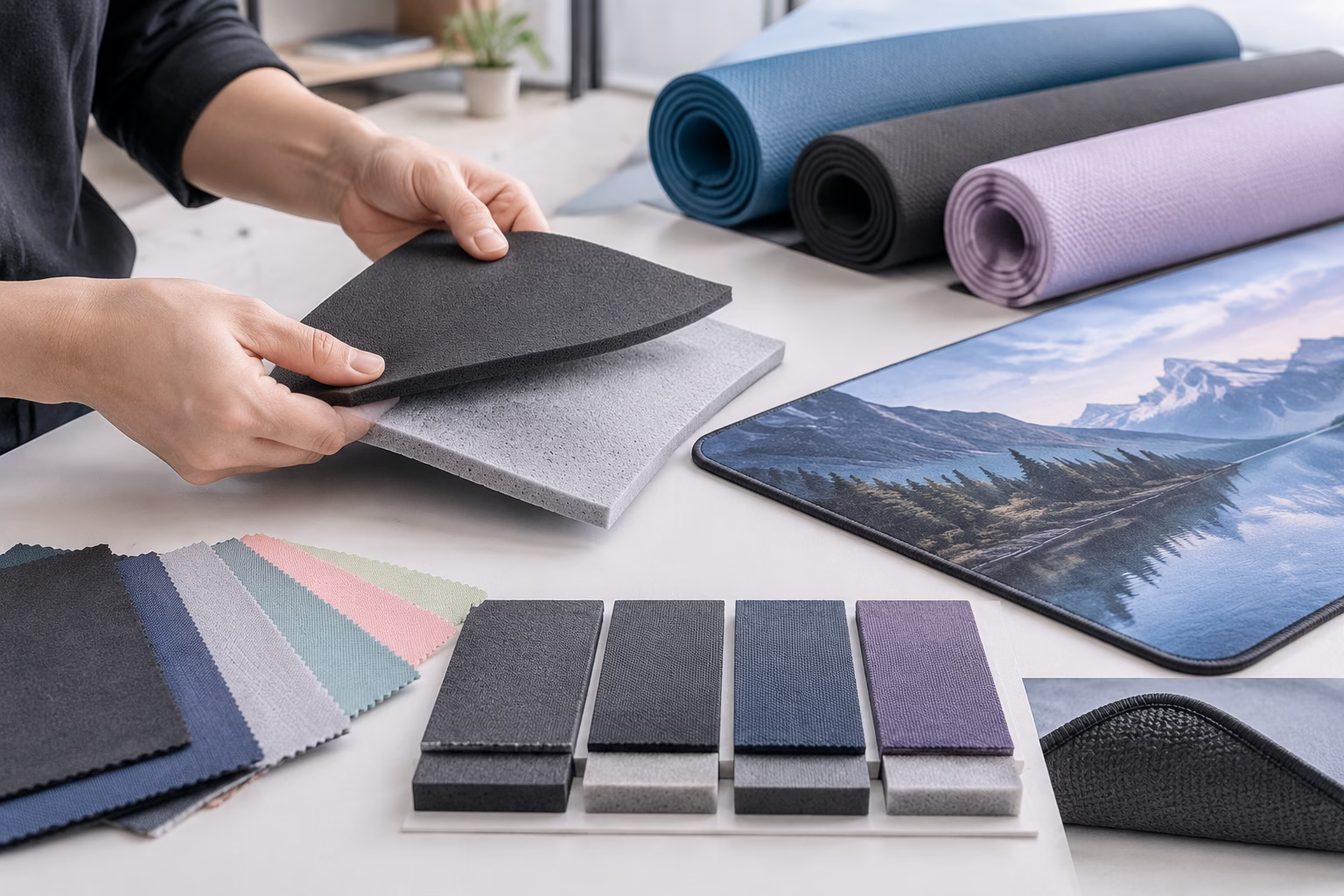
Prepare the PORON Mat Sample and Artwork Specification
A useful RFQ names the complete product, not only the PORON material. Include the intended use, placement surface, dimensions, units, quantity tiers, destination and target date. State the proposed grade if known, but ask the manufacturer to identify suitable alternatives, available thicknesses and any fabrication limits that affect the quotation.
Buyer-ready specification brief
- Application: intended use, placement surface, load pattern, environmental exposure, cleaning and storage conditions.
- Material: proposed PORON grade, supporting technical document and confirmation of material identity and traceability.
- Construction: layer order from surface to backing, including adhesive or laminated components where applicable.
- Dimensions: shape, length, width, unit system, nominal thickness, tolerance and agreed measurement location.
- Finish: surface texture, printing method or artwork constraints, cut profile, corner treatment and edge finish.
- Packaging: protection needs, packing format, quantity tier and destination requirements.
- Acceptance: dimensional checks, visual review, tactile comparison and compression or recovery evaluation conditions.
Identify the purpose of each sample: material screening, construction review, artwork approval or production approval. These are different decisions. A material-screening piece may answer a feel question, while a production sample must also represent the proposed layers, dimensions, printing, edges and packaging.
Keep artwork, drawings, physical samples and specifications under separate plain-language records. Each item may have its own identifier, revision and approval date. One release log should cross-reference the exact versions reviewed and approved together. This prevents an approved artwork file from being paired with an earlier construction drawing or an unapproved sample.
For a structured sourcing handoff, use Custom Mat Sample Development to provide the application brief, artwork status, construction details and requested evaluation points. Ninghow Mats should confirm available grades, thickness ranges, size limits, printing, edges, sampling, minimum order requirements and lead time rather than treating these as automatic features.
Evaluate the Finished Sample and Release the Production Specification
Approve the finished mat as a complete construction. Begin with material identity and layer order, then inspect dimensions, nominal versus measured thickness, surface appearance, print quality, cut profile, edges, backing and packaging fit. Record direct observations separately from the pass or fail decision so later changes remain understandable.
Finished-sample inspection checklist
- Material: proposed grade, supplier documentation, identity confirmation and traceability.
- Construction: layer order, backing, adhesive or lamination and compatibility with the requested finish.
- Dimensions: length, width, shape, thickness, tolerance and measurement location.
- Compression: load, contact area, duration, temperature, recovery period, measurement method and observed response.
- Appearance: surface texture, color, artwork, print registration, cut profile and edge consistency.
- Packaging: product protection, fit, labeling requirements and shipping condition after review.
- Release: agreed limits, approved versions, open issues, responsible approvers and change-control method.
Compression response describes what happens while the mat is loaded; recovery describes what happens after the load is removed. Lasting deformation or compression set requires defined load, duration, temperature and measurement timing. Do not convert a supplier’s material value into a universal finished-mat acceptance limit. The buyer and manufacturer should agree on representative conditions and acceptable observations for the specific application.
Ninghow Mats should document sample findings and confirm the production construction before bulk manufacture. A change to grade, thickness, backing, artwork, edge treatment or packaging should trigger a new review of the release log. Quality records and color checks can support that process through Mat Quality Control and Color Consistency, while the approved sample remains the reference for the complete product.
For relevant company and manufacturing context, see Custom Silicone Mats.
Frequently Asked Questions
Is PORON the same as ordinary PU foam?
No. PORON is a branded polyurethane material family. Ordinary PU foam should not automatically be described as PORON. Ask for original grade documentation and procurement traceability before making a PORON-specific material claim.
Can PORON foam density alone identify the correct grade?
No. Density must be considered with grade, hardness, thickness, construction, compression response, surface feel and application conditions. Density alone does not establish service life or finished-mat performance.
How should PORON compression and recovery be compared?
Compare candidate samples at the same thickness and construction where possible, using defined load, contact area, dwell time, temperature, recovery period and measurement method. Record observations and agreed acceptance decisions separately.
Does a thicker PORON mat always provide better cushioning?
No. Thickness can affect cushioning, fit, edge profile, handling, packaging and compression behavior. A thicker construction may not suit the product, so evaluate the complete finished sample under representative conditions.
What information should a buyer send when requesting a custom PORON mat sample?
Send the application, placement surface, dimensions and units, proposed thickness, quantity tiers, artwork, surface, backing, edge treatment, packaging, destination, target date and intended sample purpose. Include the load, cleaning and acceptance conditions that matter to the application.
How can a buyer verify that the proposed material is genuine PORON?
Request grade-specific technical documentation, supplier identity and procurement traceability, then compare those records with the proposed sample and construction. The manufacturer should identify any material substitution or conditional feature before production approval.