
There is no defensible fixed number of years for PORON foam lifespan in every custom mat. Service life depends on the selected PORON grade, finished thickness, load pattern, compression frequency, environment, handling and the performance limits agreed for the application. Buyers developing a project can begin with Custom PORON and PU Foam Mats, but a material name alone cannot establish how long the finished product will remain suitable.
For a B2B program, define service life as the period during which the completed mat continues to meet agreed requirements for cushioning, recovery, dimensional fit, surface condition, appearance and protection. This makes the question measurable. Supplier data for a particular PORON grade can inform material selection, but it does not automatically predict the performance of a converted, laminated, printed or backed mat.
PORON Foam Lifespan Depends on the Finished Mat Specification
PORON foam durability is a system-level question. The grade affects compression response and recovery, while thickness and cut geometry influence how force travels through the mat. A concentrated load may behave differently from distributed contact, and intermittent use may create a different performance pattern from continuous compression. Temperature, humidity, light exposure, cleaning and contact with application-specific substances can also affect the finished construction.
Recovery describes how the foam returns toward its original condition after loading. Compression set describes the permanent or incomplete recovery remaining after compression under defined test conditions. Neither term should be treated as a universal lifespan limit for every finished mat. The relevant question is whether the selected construction still performs its intended function under the buyer’s actual conditions.
A practical lifespan decision formula is:
- Grade: Which exact PORON material is being considered, and what supplier documentation applies to it?
- Construction: What are the foam, surface, adhesive, carrier, backing, print and edge interfaces?
- Load profile: Where is pressure applied, at what level, for how long and how often?
- Environment: What temperature, cleaning, abrasion, storage and chemical-contact conditions will the mat encounter?
- Inspection criteria: Which changes would make the mat unsuitable for cushioning, fit, appearance or protection?
Use conditional guidance when any of these inputs is missing. A calendar estimate may be unsuitable when the load profile is unknown, when a single area receives repeated pressure, or when the mat includes several bonded or printed layers. Ninghow Mats should compare the complete approved construction and confirm the available grade, dimensions, thickness, finishing and sample route for the specific project. That is a manufacturer confirmation, not a blanket acceptance guarantee.
How Repeated Compression and Load Change Performance
The most useful durability information begins with the way the mat is loaded. Intermittent contact allows periods of recovery between uses. Repeated cycling adds a defined sequence of loading and release. Continuous compression keeps the material under pressure for a sustained dwell time. These patterns should not be grouped together simply because they involve the same nominal load.
Before requesting a service-life assessment, document the compression profile. Include the contact area, approximate load, whether the load is centered or distributed, cycle frequency, dwell time, unloaded recovery time, temperature and the location of repeated contact. A mat compressed beneath equipment in one defined zone may need a different evaluation from a mat used across its full surface.
| Buyer input | Why it matters | Evidence or next action |
|---|---|---|
| Load and contact area | Shows the pressure pattern and whether force is concentrated. | Provide the best available measurement or a clearly labelled estimate. |
| Dwell time and frequency | Distinguishes continuous compression from repeated cycling. | Describe a normal cycle and the longest expected loaded period. |
| Recovery requirement | Defines what change would affect fit, cushioning or protection. | Agree how recovery or thickness retention will be observed. |
| Temperature and environment | Provides the reference conditions for comparing results. | Include operating, cleaning and storage exposure. |
Compression-set data is meaningful only with its test conditions, including the material grade, specimen, compression arrangement, duration, temperature and recovery measurement. ASTM D3574, ISO 2439 or ISO 3386-1 may be relevant methods depending on the property being investigated, but a test method does not create an automatic acceptance threshold for a finished mat. The buyer and manufacturer must define the required response.
Hypothetical Specification Review
A buyer needs a PORON mat beneath equipment that applies repeated pressure to one known contact zone. The approximate load and location are available, but compression frequency, dwell time and the required recovery limit are not documented. The correct decision is to withhold a lifespan estimate, request the missing operating profile, obtain grade documentation and evaluate a finished sample against agreed recovery and fit criteria. This example is a planning method, not evidence of Ninghow Mats performance.
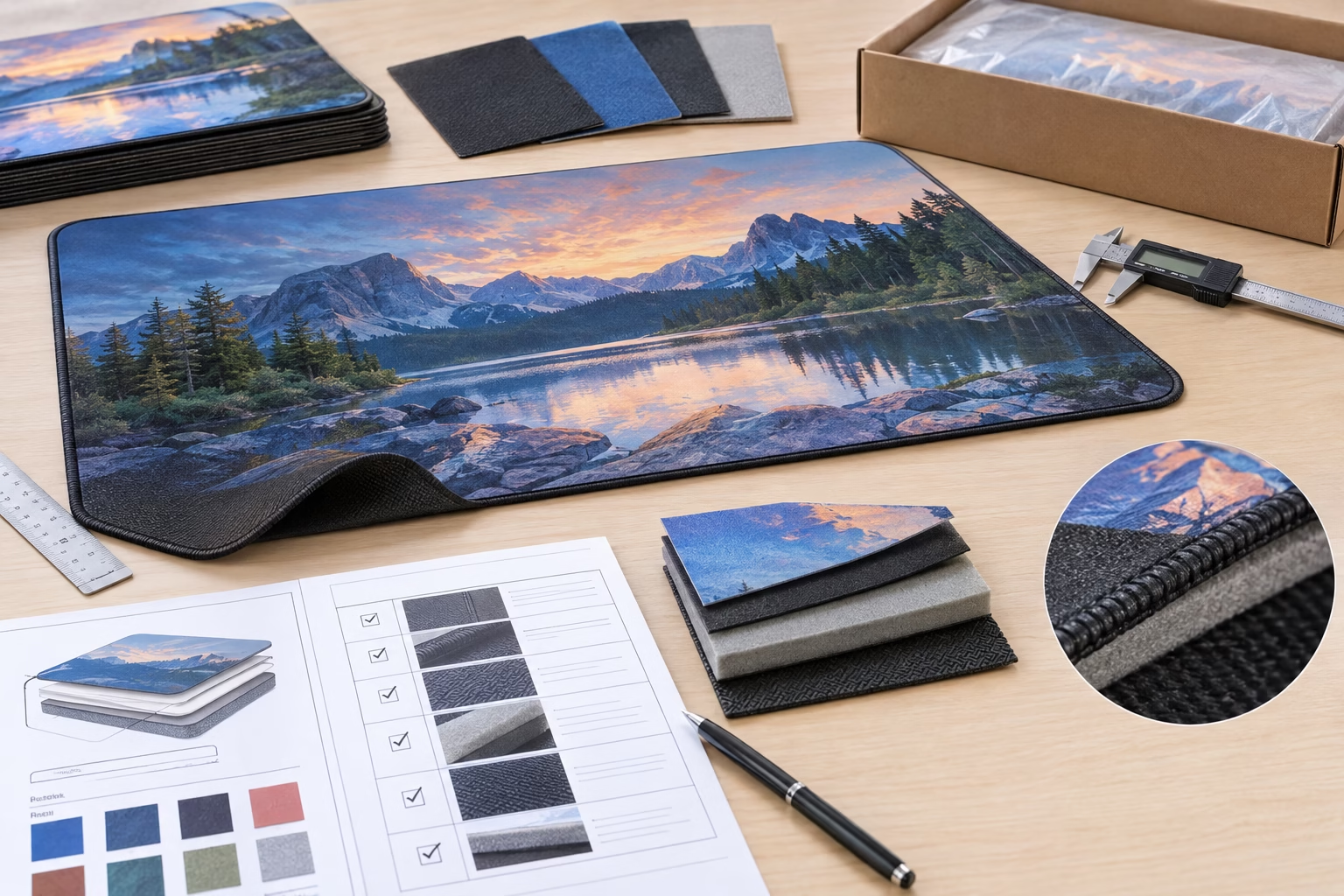
Thickness, Layers, Surface and Edges Create a System-Level Service Life
Thickness can influence force distribution, cushioning and recovery, but thicker foam does not automatically mean a longer-lasting mat. The result depends on the grade, geometry, load and the other layers surrounding the foam. A cutout, narrow section or repeated edge contact can change local stress even when the overall mat thickness remains unchanged.
Evaluate the finished construction rather than extrapolating from a raw foam swatch. Surface materials may wear, printed areas may change appearance, adhesives may lose integrity, backing may affect fit, and edges may lift, tear or fray independently of foam deformation. These are separate failure mechanisms and should be recorded separately during sample review.
| Construction element | Primary function | Inspection concern |
|---|---|---|
| PORON foam | Cushioning and compression response | Permanent indentation, reduced recovery or loss of support |
| Surface or print | User contact, appearance or branding | Wear, cracking, discoloration or print failure |
| Adhesive or carrier | Layer positioning and structural connection | Delamination, bubbling, shifting or bond failure |
| Backing and edges | Placement, dimensional fit and perimeter finish | Sliding, curling, tearing, edge damage or loss of fit |
Specify total finished thickness separately from each component-layer thickness. The finished measurement should state the measurement locations and condition, because component ranges cannot simply be added to predict the assembled result. A useful layer specification identifies each layer’s function, material, interface, measurement basis and acceptance evidence. Ninghow Mats should confirm which layers, edges, printing methods and backing options are available before the buyer approves the construction.
Environmental Exposure and Handling Set the Operating Boundaries
Temperature, humidity, light exposure, dust, abrasion and storage conditions can change how a custom mat performs over time. The relevant question is not whether PORON foam is generally durable, but whether the selected grade and finished construction remain suitable in the buyer’s actual operating environment.
Cleaning and contact materials also need to be documented. List the cleaning solution, wiping method, frequency, drying process and any likely contact with oils, sweat, inks, packaging materials or process chemicals. Compatibility with the foam does not automatically establish compatibility with the surface, adhesive, backing or printed finish.
Reference conditions make comparisons meaningful. A sample evaluated indoors at controlled temperature and humidity may not represent a mat exposed to sunlight, heat, repeated wiping or abrasive movement. Ninghow Mats should review the exact grade, layer structure and exposure profile before confirming a construction. Supplier temperature and compatibility information should support that review, while representative samples can show how the complete mat responds.
Exposure Worksheet for the Quotation Brief
| Condition to record | Potentially affected area | Evidence or next action |
|---|---|---|
| Temperature, humidity and light or UV exposure | Foam, surface, adhesive, backing and print | Request grade-specific guidance and define sample conditioning |
| Dust, abrasion and handling frequency | Surface, edges, artwork and dimensional fit | Describe contact motion and inspect a representative sample |
| Cleaner, oil, sweat or chemical contact | Foam, coating, adhesive and printed areas | Provide the substance and cleaning method for compatibility review |
| Storage, packaging and transport | Flatness, edges, surface and finished shape | Document storage position, packaging and post-storage inspection |
These facts belong in the quotation and approval brief because they determine which evidence is relevant. When exposure cannot be reproduced reliably, treat the result as an indication rather than a service-life guarantee.
Set Inspection Criteria Before the Mat Is Put Into Service
A useful maintenance process defines what to watch before a mat reaches complete failure. Inspect for permanent indentation, reduced cushioning, cracking, tearing, delamination, surface wear, edge damage and loss of fit. Record the condition separately from its consequence: a mark may affect appearance, while a change in recovery or fit may affect the product’s function.
Visual inspection is only one level of review. Dimensional checks require a stated measurement condition, locations and comparison reference. Recovery or compression observations require a defined timing and loading approach. Functional checks should reflect the intended purpose, such as protection, comfort, support, appearance or placement stability.
There is no universal inspection interval or pass/fail threshold for every PORON mat. Buyers and manufacturers should agree on the application-specific limit, escalation action, reinspection responsibility and replacement decision. For repeat programs, retain an approved sample and compare production or in-use samples against that reference where practical. Ninghow Mats can help translate the approved specification into review points, subject to project confirmation. Buyers can also use the Mat Quality Control and Color Consistency resource when planning broader sample and appearance checks.
Finished-Mat Inspection Checklist
| Condition | Requirement potentially affected | Evidence and next action |
|---|---|---|
| Indentation or reduced recovery | Cushioning, support or fit | Photograph and measure under the agreed condition; compare with the approved reference |
| Cracking, tearing or edge damage | Appearance, handling or protective function | Record location and extent; hold, rework or escalate according to the specification |
| Delamination, bubbling or shifting | Layer integrity and dimensional stability | Inspect the interface and request construction review |
| Surface wear or print change | User contact, branding or appearance | Compare with the approved sample and document the affected area |
| Loss of fit, curling or movement | Placement and dimensional function | Check the installation surface and finished dimensions before deciding on replacement |
Keep a plain-language release log for the approved specification, drawing, artwork, packaging brief and physical sample. Each item may have its own identifier, revision and approval date. The log should cross-reference the exact versions reviewed together, rather than assuming that every document shares one revision code.
Build a PORON Foam Mat Specification and Approval Brief
A specification brief turns a general lifespan question into a controlled purchasing decision. Start with the application, placement surface, finished dimensions and units, intended function, quantity tiers, artwork, packaging, destination and target date. Then describe the load, contact pattern, use frequency, cleaning method, temperature, humidity, light, abrasion and chemical exposure.
Request documentation for the exact PORON grade under consideration, together with the proposed layer stack, total finished thickness, surface, backing, edges, printing and measurement basis. Manufacturer confirmation is still needed for available grades, construction, dimensions, thickness, finishing, sampling, minimum order quantity and lead time. Do not treat a material data sheet or test method as a finished-mat acceptance limit.
Specification Brief Template
- Application: function, placement surface, contact zone and operating movement.
- Construction: exact grade, layer function, interfaces, surface, backing, edges and printing.
- Dimensions: finished length, width and total thickness, with measurement locations and condition.
- Operating profile: load, contact area, frequency, dwell time, temperature, cleaning and exposure.
- Acceptance criteria: recovery, fit, appearance, adhesion, surface condition and protective or cushioning function.
- Evidence package: supplier data, application questionnaire, representative sample, inspection records and approval release.
Evidence-Based Approval Decisions
| Evidence status | Recommended action |
|---|---|
| Grade data, application inputs and representative sample are available | Compare the sample with agreed criteria and proceed only after approval |
| Material information is available but load or exposure details are missing | Request the operating profile before discussing service life |
| Construction is defined but representative-use evidence is absent | Test the finished sample under relevant conditions |
| Sample shows a mismatch in fit, recovery, surface or bonding | Revise the construction and repeat the review |
| Documents or approval versions conflict | Hold release until the specification, sample and records are reconciled |
For a controlled prototype workflow, buyers may request Custom Mat Sample Development and evaluate the complete finished construction before bulk approval. This approach produces a more defensible PORON foam lifespan decision than assigning a calendar estimate without application evidence.
For relevant company and manufacturing context, see Custom Silicone Mats.
Frequently Asked Questions
Can PORON foam lifespan be stated as a fixed number of years?
Not responsibly without application data. Lifespan means the finished mat continues to meet agreed cushioning, recovery, fit, appearance and protective requirements under defined conditions.
What is PORON compression set, and why does the test condition matter?
Compression set describes permanent or incomplete recovery after compression. The result depends on the load, duration, temperature, recovery period, specimen and test method, so it is not a universal finished-mat limit.
Does thicker PORON foam always last longer in a custom mat?
No. Thickness changes force distribution and recovery, but layers, geometry, load, interfaces, environment and finishing also affect performance. Evaluate the approved finished construction.
Which operating conditions should buyers disclose before requesting a PORON mat?
Provide load, contact area, frequency, dwell time, temperature, humidity, light exposure, cleaning method, abrasion, storage and possible contact with oils, chemicals, sweat or inks.
Should the finished laminated mat be tested instead of the raw PORON sheet?
When the product includes layers, adhesive, backing, printing or edge finishing, representative finished-mat evaluation is more relevant than raw-sheet data alone.
What inspection signs indicate that a custom PORON mat needs review or replacement?
Look for permanent indentation, reduced recovery, cracking, tearing, delamination, surface wear, edge damage or loss of fit, then compare the condition with the agreed application criteria.