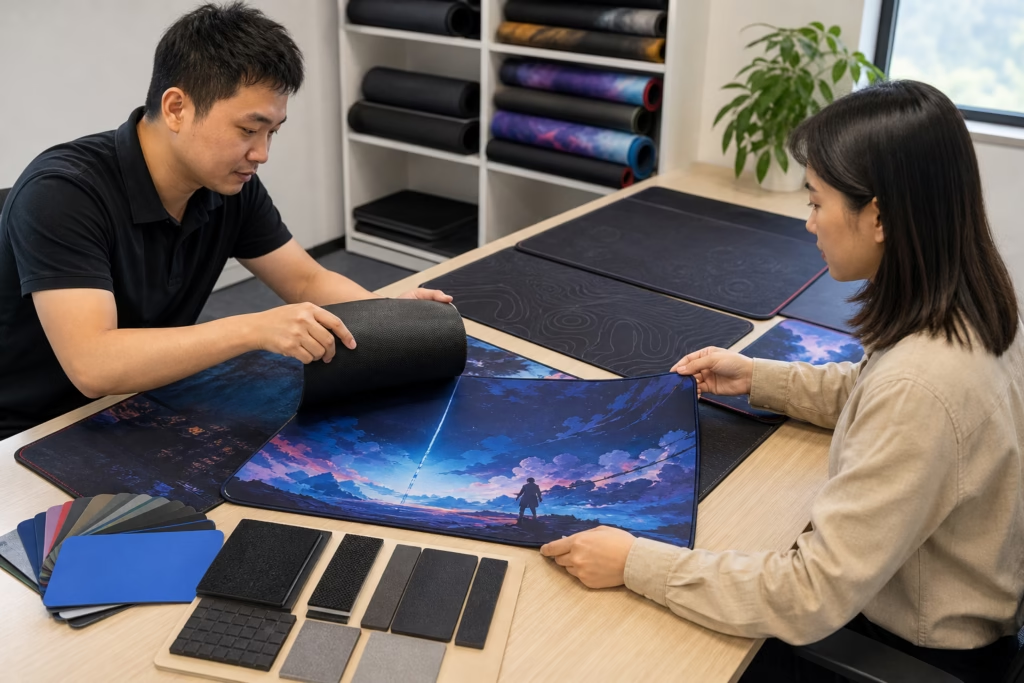
Custom mat sample approval should confirm that the physical sample matches the agreed specification and is suitable for its intended use before production moves forward. Compare the sample with the buyer’s product brief, approved artwork, drawing, construction, finish and packaging requirements. A sample that looks correct but has not been checked against these references is not yet a complete production decision.
Ninghow Mats can review buyer-supplied application details, specifications, artwork and sample-review requirements through Custom Mat Sample Development. Exact materials, grades, layer constructions, processes and acceptance limits require confirmation for the individual project.
What Should a Custom Mat Sample Approval Confirm?
Approval is a documented comparison, not simply a visual reaction to a prototype. A prototype is an early physical version used to assess a proposed design. A production reference sample is a sample accepted as the physical reference for later production review. The written specification remains essential because it defines requirements that may not be visible in one sample, such as the intended load, cleaning method, packaging components or measurement basis.
Use the intended application as the starting point. A counter mat, desk mat, work mat and cushioning mat may require different checks for stability, surface behavior, coverage, comfort and cleaning. The approval baseline should identify the placement surface, finished dimensions, material or layer construction, artwork, edge treatment, packaging format and any relevant use conditions.
For each finding, choose one clear status:
- Pass: the observed result matches the applicable requirement.
- Revise: a required correction is identified before the next sample or production release.
- Clarify: the requirement, measurement method or visual reference is incomplete.
- Hold: production approval cannot proceed until an unresolved issue or evidence gap is addressed.
Link every finding to its source: the product brief, drawing, artwork proof, material description, packaging requirement or agreed use check. This prevents preferences from being confused with mandatory corrections. A sample can expose a design issue and still be useful, but it should not replace a complete written specification.
Review Functional Fit in the Intended Use Environment
Evaluate a custom mat prototype where it will actually be placed and under conditions that represent the planned use. The buyer should provide the placement surface, contact area, expected load, duration, environment and cleaning method where these factors affect the decision. The manufacturer can then assess whether the proposed construction is feasible and identify what can be checked through an exploratory use review or requires a defined test.
| Review variable | Condition to record | Observation and decision |
|---|---|---|
| Stability or grip | Placement surface, contact and movement applied | Movement observed, limitation noted, pass or follow-up assigned |
| Cushioning | Load, contact area, duration and recovery period | Compression behavior recorded without treating thickness alone as proof |
| Coverage | Working area, user position and surrounding clearance | Footprint checked against the intended task |
| Surface behavior | Contact materials, cleaning method and viewing conditions | Texture, appearance and response recorded |
Thickness alone does not establish cushioning, stability or service life. Different materials and layer constructions can respond differently under the same apparent thickness. Likewise, an informal placement check is not automatically a validated performance test. Record the sample identification, test conditions, observations, limitations and next action so that the result can be interpreted correctly.
Applied review example: deciding whether a branded counter mat sample is ready
A buyer is reviewing a printed counter mat prototype before authorizing a bulk programme. The placement surface and finished dimensions are specified, and artwork and packaging requirements exist, but no agreed measurement basis, cleaning procedure, colour reference condition or production-release decision has been recorded. The correct decision is hold, not pass or revise: create the review record, define the missing conditions, measure the sample, inspect the backing and print, run the agreed-use checks, and then resolve any variances with the manufacturer.
Do not infer slip performance, food-contact suitability, service life or health benefits from appearance or material thickness. Those claims require project-specific evidence and an appropriate verification basis. The buyer defines the real use conditions; Ninghow Mats confirms the proposed construction and the feasible way to evaluate it.
Verify Dimensions, Shape and Layer Construction
Measure the finished sample against the approved drawing using the agreed units, measurement locations and sample condition. Record finished length, width and total thickness separately from the thickness of individual layers. Total thickness is the combined physical build at the specified measurement point; it does not automatically describe the thickness, density or compression response of each component.
Check more than the outside dimensions. Compare corners, cutouts, holes, flatness, orientation and layer order with the drawing. Inspect the surface, backing, adhesive or carrier where applicable, and identify the material grade rather than relying on a broad material name. A material label alone may leave important questions about formulation, construction and process compatibility unanswered.
| Feature | Reference | Inspection record | Disposition |
|---|---|---|---|
| Finished size | Dimensioned drawing and units | Locations, method, condition and observed result | Pass, revise or clarify |
| Total thickness | Specified measurement basis | Instrument or method and measured result | Compare with project limit |
| Shape and details | Drawing for corners, holes and cutouts | Visual check or dimensional comparison | Record each variance |
| Layer construction | Material and construction description | Surface, backing, carrier and order observed | Manufacturer response required if different |
Conditioning and measurement conditions should be agreed by the buyer and manufacturer when they may affect the result. Common supplier ranges can inform an early discussion, but they do not establish Ninghow Mats stock sizes, tolerances or acceptance limits. The manufacturer must confirm the achievable construction, while the buyer approves the dimensional basis and project tolerances before production authorization.
Inspect Printing, Surface Finish and Edge Treatment
A printed sample should be compared with the approved artwork and visual specification, not judged only by whether it looks attractive on its own. Check logo placement, orientation, text, required marks, image coverage and registration. Registration means that printed elements remain aligned with the intended design; a visible shift can affect small text, borders or layered artwork.
Review color under the viewing condition agreed for the project. A monitor, phone screen and physical print can show the same artwork differently, so the buyer should supply the reference or approved proof and identify which differences matter commercially. Check legibility at the expected viewing distance, especially where the mat is used on a counter or desk.
The surface and edges need their own inspection. Record texture, gloss or matte appearance, backing visibility, corner shape, edge treatment and any marks that affect use or presentation. Keep visual corrections separate from performance questions. A color adjustment may require artwork or print review; backing movement or cleaning response may require a construction or use check.
Applied review example: deciding whether a branded counter mat sample is ready
A buyer has a printed counter mat prototype with specified dimensions and an intended placement surface. Artwork and packaging requirements exist, but there is no recorded color viewing condition, measurement basis, cleaning procedure or production-release decision. The correct decision is hold, not approval: define those criteria, inspect the print and backing, record the agreed-use observations, and resolve any variance with the manufacturer.
Use this compact mat print sample checklist to keep the review traceable:
| Review area | Source and method | Record |
|---|---|---|
| Artwork | Approved file or proof; compare placement, orientation, text and marks | Pass, correction or clarification |
| Color | Buyer-supplied reference under the agreed viewing condition | Observed difference and required action |
| Surface | Inspect texture, coverage, legibility and backing visibility | Photograph or written observation |
| Edges | Compare corners and edge treatment with the specification | Defect, preference or construction question |
Ninghow Mats can assess buyer-supplied artwork, visual references and sample feedback for a project. The printing method, surface compatibility, edge options and feasible reproduction still require confirmation against the selected construction. A test method such as ISO 105-X12 may be relevant to a selected rubbing assessment, but a method does not create an automatic acceptance threshold.

Review Packaging and Delivery Presentation
Packaging approval covers the delivered product, not just the loose mat. Compare the sample pack-out with the program brief: packaging components, protection, labels, orientation, quantity and presentation. Check whether the packaging protects the surface, printed appearance and shape during the handling and storage conditions relevant to the distribution plan.
Separate packaging observations from product defects. A missing label, incorrect quantity or unsuitable protective layer belongs in the packaging record, while a print mark or damaged edge belongs in the product inspection. This distinction makes ownership clearer and helps determine whether the physical mat must be revised or whether the pack-out documentation alone needs correction.
Record the destination, labeling language or content, individual and outer packaging expectations, and any handling or storage check that the buyer has defined. Ninghow Mats can review these inputs and confirm feasible packaging components and presentation for the specific project. The buyer remains responsible for approving the market presentation and required information.
Packaging review checklist: identify each component; verify protection at contact points; check labels and orientation; count the agreed quantity; photograph the pack-out; record any observation after the agreed handling or storage check; classify it as product correction, packaging correction, documentation update or open question.
Document Corrections Before Production Approval
Convert the inspection into one consolidated approval record. Each finding should identify the requirement, the evidence reviewed, the observation, the decision, the owner and the next action. Useful statuses are approved, approved with documented variance, revise and hold. “Clarify” can be used when the requirement itself is incomplete.
Reference the relevant artwork, drawing, material description or packaging requirement for every finding. Keep revisions separate: a physical sample, specification, drawing, artwork file and packaging brief may each have its own identifier, revision and approval date. A single release log should cross-reference the exact versions reviewed and approved together. Do not assume that every item should carry the same revision or date.
| Requirement | Evidence reviewed | Finding | Decision and owner |
|---|---|---|---|
| Artwork placement or color | Approved artwork and physical sample | Pass or described variance | Approve, revise or assign correction |
| Construction or finish | Specification and inspection record | Observed condition and limitation | Manufacturer response required |
| Packaging | Pack-out brief and sample components | Missing, damaged or suitable item | Buyer or manufacturer action |
| Release status | Completed approval record | Open issues and dates | Final production authorization or hold |
Before authorizing production, request the completed review record, buyer-approved revisions, manufacturer responses and a final release decision. Ninghow Mats can review consolidated feedback and revised specifications as part of project communication. For a project-specific discussion, send the application, specification, artwork, packaging brief and sample-review requirements through Contact Ninghow Mats.
For related quality-control and evidence context, see Mat Quality Control and Color Consistency.
Frequently Asked Questions
What should a buyer approve in a custom mat sample?
Approve the agreed application fit, construction, dimensions, artwork, finish and packaging presentation. Any variance should be described, accepted by the responsible party and recorded before production authorization.
Is a sample approval a substitute for a written specification?
No. The sample provides physical evidence of the proposed product, while the written specification defines the requirements, measurement basis, artwork, packaging and unresolved decisions.
How should custom mat dimensions and thickness be measured?
Use the agreed units, measurement locations, sample condition and method from the drawing or specification. Record finished dimensions and total thickness separately from component-layer thickness, without applying universal tolerances.
How should printed color and artwork placement be reviewed?
Compare the physical sample with the approved artwork and buyer-supplied color reference under the agreed viewing condition. Check placement, orientation, text, registration, coverage and legibility, then record required corrections separately from preferences.
What functional checks are relevant for a counter, desk, work or cushioning mat?
Use the intended placement surface and representative contact, load, duration, environment and cleaning conditions. Check only the properties relevant to the application, and distinguish an exploratory use check from validated performance testing.
What should packaging approval include?
Review protection, labels, orientation, quantity, components and presentation against the program brief. Record packaging issues separately from product defects and confirm which observations require a revised sample.