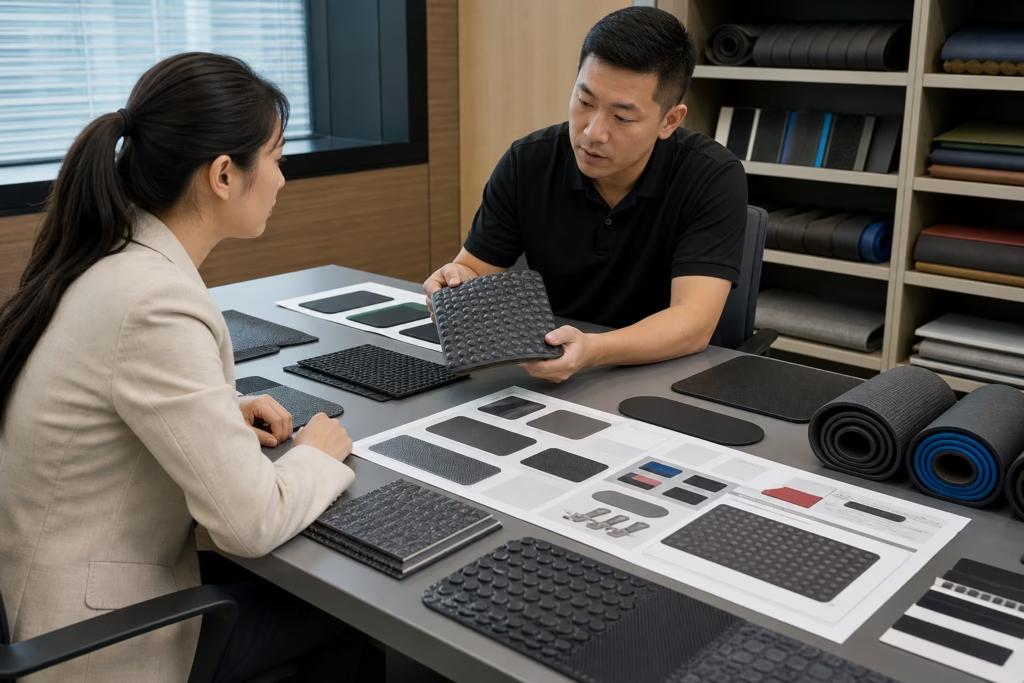
A custom mat specification sheet is the buyer’s working document for connecting the intended application, product requirements, branding, construction and commercial inputs. It gives a manufacturer enough structured information to review material options, plan sampling and prepare a quotation, but it does not guarantee product acceptance or finished-product performance. For projects that need an approval sample, begin by defining the development path through Custom Mat Sample Development.
The most useful brief separates what is fixed from what is preferred and what remains unknown. A request such as “make a branded rubber mat in this approximate size” is a starting concept, not a complete OEM mat specification. The manufacturer still needs to understand the use environment, finished construction, dimensions, artwork, finishing, quantity and shipment context.
What a Complete Custom Mat Specification Sheet Must Answer
Start with the product program: OEM product, private-label range, distributor assortment or promotional campaign. Then describe who will use the mat, where it will be placed and what it must do. The required function may involve surface protection, cushioning, stability, fit, appearance or branding. These functions should be recorded separately from a preferred material, because one material name does not define the finished mat.
For example, “silicone” identifies a material family, but it does not define the grade, layer order, surface texture, backing, finished thickness, edge treatment or application conditions. A complete custom mat specification sheet gives Ninghow Mats a basis for reviewing the requested construction and identifying which details still need manufacturer confirmation.
| Field | What the buyer should provide | Status to assign |
|---|---|---|
| Application | Placement surface, users, environment and required function | Required |
| Construction | Material preference, layer order, surface, backing and finish | Required or manufacturer-confirmed |
| Geometry | Finished dimensions, shape, units, measurement locations and tolerances | Required |
| Branding | Artwork, print zones, colour references and logo rules | Required when decorated |
| Commercial inputs | Quantity tiers, packaging, destination and target date | Required for quotation review |
Use four practical labels beside each field: required, preferred, optional or unknown. This prevents a preference from being mistaken for a performance requirement and makes unresolved questions visible. The brief should also state which decisions require manufacturer confirmation before approval or production, such as the available grade, finished construction, sampling approach, edge option or packaging format.
Define Application, Environment and Success Criteria Before Choosing Materials
Application information tells the manufacturer what the mat must withstand and what the sample must demonstrate. Record the placement surface, user activity, contact conditions, cleaning exposure, storage method and handling environment. Include photographs or a marked-up placement drawing where they clarify the setting. A floor mat used by frequent pedestrians has different review priorities from a protective mat placed beneath equipment or a fit-critical vehicle product.
Describe success in observable terms. A buyer may require a stable position, a comfortable contact surface, protection from abrasion, a particular visual finish or a precise fit. Also state unacceptable outcomes, such as movement, exposed edges, difficult cleaning or interference with nearby components. These statements help separate a functional requirement from a preferred feel or appearance.
For any evaluation, define the reference conditions before comparing samples. Relevant conditions may include the load, placement surface, duration, cleaning method, temperature or humidity and the inspection location. A material or supplier data sheet can provide useful context, but raw-material information does not automatically establish how the finished mat will perform. Ninghow Mats should review whether the proposed grade and construction suit the described use.
Hypothetical specification-review example
Situation: A private-label buyer has a branded floor mat concept, an intended retail use and an approximate footprint. The buyer has not selected a material grade, backing, edge treatment or packaging format, and has no approved drawing, physical reference sample or performance target.
Decision: Submit a staged brief rather than request a quote against an incomplete concept. Mark the application and estimated footprint as known inputs, list material, backing, edge and packaging as open decisions, and state the desired branding and functional priorities. The next action is to provide a dimensioned drawing, artwork reference, application conditions, quantity tiers, packaging needs and destination, then request material and sample recommendations.
Specify Layer Construction, Surface, Backing, Size and Thickness
Make the physical product measurable before asking for comparable samples. Record finished width, length, shape and units, then identify where each dimension is measured. State whether a value is a target, an allowable limit or a reference dimension. For irregular profiles, cut-outs, holes or fit-critical zones, use a dimensioned drawing or a marked-up reference sample rather than relying on a verbal description.
Describe the layer stack in order from top to bottom. Include the material grade where known, surface texture or finish, backing, adhesive or carrier requirements and any raised features. “Thickness” should refer to the agreed finished product measurement, not an automatically combined total of unrelated component-layer ranges. If texture, edge features or compression affect the reading, the specification should say whether they are included.
For width, length and thickness, identify the measurement locations and basis. Finished width and length may be checked edge-to-edge after agreed conditioning; thickness should be measured at agreed locations and may need separate treatment for textured or reinforced areas. Any supplier or common-market range should be treated only as comparison context, with its measurement basis stated. It is not a universal Ninghow Mats size, tolerance or capability claim.
A useful construction block in the brief can use these prompts:
- Finished geometry: overall dimensions, profile, cut-outs, holes and orientation.
- Layer construction: top surface, core or carrier, backing and attachment features.
- Measurement basis: units, locations, conditioning and treatment of raised features.
- Acceptance basis: target values, allowable limits, reference sample or manufacturer proposal.
- Open confirmation: grade, thickness range, edge treatment, sampling method and inspection points.
After reviewing the brief, Ninghow Mats can confirm which grades, finished constructions, dimensions, thicknesses, edges and sampling options are available for the project. Candidate constructions should be compared under consistent conditions for feel, compression, cleaning and appearance before the buyer approves the specification for the next stage.
Turn Artwork, Printing, Cutting and Edges Into Reviewable Requirements
Artwork becomes easier to review when the brief connects the design to the finished mat. Provide the artwork file, logo rules, colour references, print locations and the visual elements that matter most to the brand. Also state whether the artwork is fixed, preferred or still being developed.
Describe the physical treatment alongside the graphics: overall cut shape, corner treatment, edge finish, surface texture and any functional edge requirement. Mark print zones and safe areas on a dimensioned outline. Artwork orientation, repeat direction and the distance from cuts or edges can affect the review, so do not leave these decisions implied.
Separate appearance preferences from requirements that affect fit, handling or brand approval. For example, a preferred edge style may have an alternative, while a logo position or cut-out may be mandatory. A manufacturer-reviewed proof or physical sample should be the basis for approving scale, registration, colour appearance and edge treatment.
Artwork and Finishing Intake Checklist
- Artwork: production artwork or a clearly labelled placeholder, logo rules, orientation and repeat direction.
- Colour: colour references, priority colours and the agreed visual or instrument-based review method.
- Geometry: dimensioned outline, cut-outs, corner details, print zones and safe areas.
- Finishing: cutting method, edge treatment, surface finish and any functional edge feature.
- Approval: named approver, proof or sample required, and unresolved visual decisions.
Ninghow Mats can review compatible printing, cutting and edge options after the selected construction and artwork requirements are defined. The cutting and finishing capabilities page provides relevant process context, but project-specific compatibility and appearance still require confirmation.
Plan Sampling, Inspection and Quality-Control Evidence
A sample should answer specific questions, not simply show that a mat can be produced. State whether the sample must demonstrate dimensions, layer construction, surface appearance, backing, artwork, edges, packaging or all of these. This gives the buyer and manufacturer a shared basis for comments and approval.
List inspection locations and reference conditions before comparing results. For geometry, identify the dimensions and locations to check. For thickness or surface features, state how raised, textured or reinforced areas are treated. If a test method is relevant, use it to define how an evaluation is performed; create the project pass or fail requirement separately.
Quality evidence can include dimension and thickness records, material documentation, artwork proofs, sample comments and agreed evaluation results. The available records depend on the finished construction and project scope. Ask Ninghow Mats which evaluations and documents are available rather than importing an unrelated market value as an acceptance threshold.
Hypothetical Specification-Review Example
A private-label buyer knows the intended retail use, an approximate footprint and the artwork concept, but has not selected a material grade, backing, edge treatment or packaging format. There is no approved drawing, physical reference sample or performance target, so a manufacturer cannot fairly compare construction options or confirm the finished result.
The buyer decides to submit a staged brief that separates fixed requirements, preferences and unknowns. The next action is to provide a dimensioned drawing, artwork reference, application conditions, quantity tiers, packaging needs and destination, then request material and sample recommendations.
Sample Approval and Release Checklist
- Sample scope: identify the dimensions, construction, artwork, edges, backing and packaging features being evaluated.
- Inspection basis: record measurement locations, units, conditioning and other reference conditions.
- Decision record: document comments, open questions, accepted changes and nonconforming results.
- Document control: keep each drawing, artwork file, specification and physical sample separately identified.
- Release log: record each item’s identifier, revision, approval date, status and the versions approved together.
Use the Mat Quality Control and Color Consistency resource for related quality-control context. A release log should make the approval relationship clear: a drawing, artwork file, physical sample and packaging brief may each have their own revision and approval date, while the log records which exact versions were reviewed together.
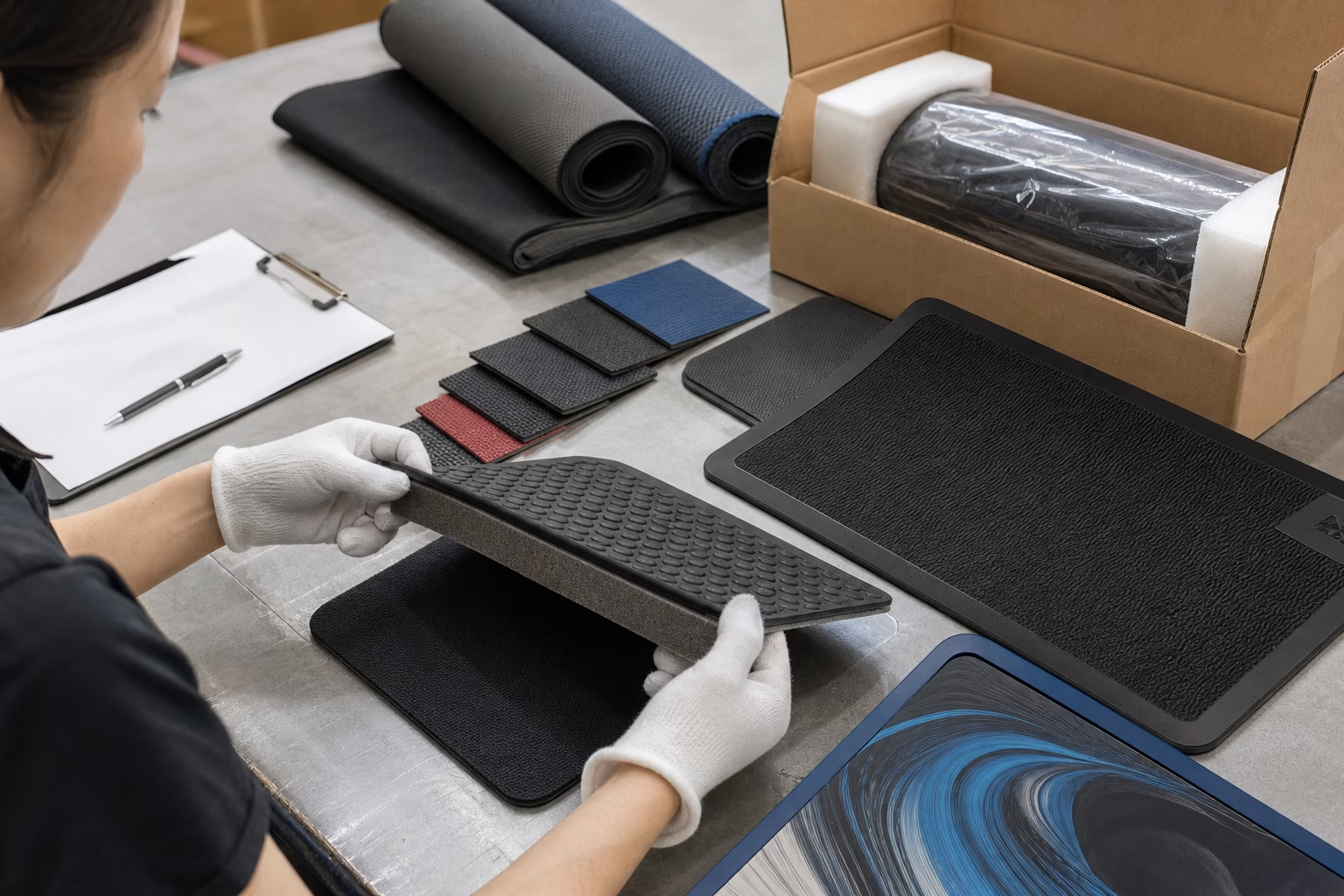
Close the Brief With Packaging, Quantity, Destination and Buyer Decisions
The final part of a private-label mat project brief converts technical information into a commercially reviewable request. State the program type, quantity tiers, packaging format, label content and handling needs. Distinguish retail-ready, individual, bulk or undecided packaging, and separate product dimensions from packed dimensions.
Add the shipment destination, delivery context and target date without assuming a lead time. Include carton or unit constraints, packaging drawings or examples, and any buyer-supplied labels or inserts. These details help Ninghow Mats assess the review and quotation inputs for the specific project.
Final Submission Checklist
- Buyer requirements: application, dimensions, construction preferences, artwork, finishing and packaging needs.
- Commercial inputs: program type, quantity tiers, destination, delivery context and target date.
- Evidence supplied: drawings, artwork, reference samples, packaging examples and evaluation records.
- Open decisions: unknown material grade, edge treatment, packaging format, acceptance criteria or sample scope.
- Requested response: material recommendations, sample plan, quotation inputs, packaging review or other defined outputs.
Before submitting, mark every field as required, preferred, optional or unknown. Then send the completed brief and supporting files through Contact Ninghow Mats, asking the team to confirm project-specific materials, sampling, packaging, MOQ and lead-time information. This creates a clear next step without treating unconfirmed commercial details as established facts.
For relevant company and manufacturing context, see Custom Silicone Mats.
Frequently Asked Questions
What information should a custom mat specification sheet include?
Include the application, environment, dimensions, construction, material preferences, artwork, finishing, packaging, quantity, destination and target date. Mark unresolved items clearly so the manufacturer can identify which decisions require review.
How precise should dimensions and thickness be in an OEM mat brief?
State the units, target values or allowable limits, measurement locations and treatment of textured or reinforced areas. A dimensioned drawing and agreed measurement basis are more useful than an isolated size or thickness number.
Can a buyer specify a material name without defining the full construction?
No. A material name does not define the grade, layer order, surface, backing, thickness or application suitability. Treat it as a preference until the finished construction and relevant conditions are confirmed.
What artwork files and print details should a private-label buyer provide?
Provide production artwork where available, logo rules, colour references, orientation, print locations, safe areas and a dimensioned outline. State how colour, scale, registration and edge appearance will be approved.
How should a buyer approve a custom mat sample?
Define what the sample must demonstrate, agree inspection locations and record comments against the specific sample and documents reviewed. Approval should identify accepted changes and any remaining conditions before production.
Which packaging and shipment details belong in the initial brief?
State the packaging format, labels, unit or carton constraints, quantity tiers, shipment destination, delivery context and target date. If a detail is undecided, label it as open rather than assuming a standard option.